
 Sign in












Decapower Curated information for Professionals, Hobbyists & Educators.
Stay up to date with the latest information on new products technology,innovations and more from Welding Machine Industry.







Why Use Pulse MIG for Thin Aluminum and Stainless Steel Welding
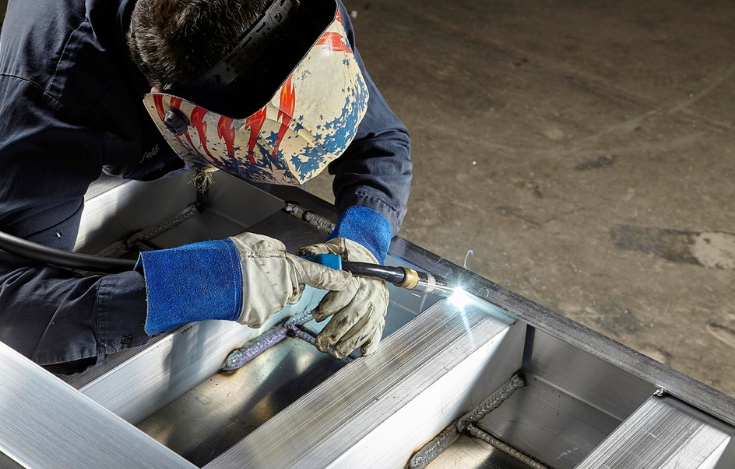
Thin sheet punishes small mistakes. Pause on an aluminum edge and it may melt away; run too long on stainless and the panel can pull out of shape or discolor. Standard MIG is fast, but that speed helps only when the puddle remains manageable.
Pulse MIG welding offers another way to control filler-metal transfer. It cannot correct poor fit-up, the wrong wire, or weak technique. With a suitable program, however, it can make the arc easier to manage on heat-sensitive work. Decapower takes this practical route in its digital MIG range, combining Pulse and Double Pulse modes with synergic setup while retaining manual adjustment for experienced welders.
Why Thin Aluminum and Stainless Steel Are Difficult to Weld
Thin aluminum: cold one moment, too hot the next
Aluminum carries heat away from the arc quickly. At the beginning of a weld, the puddle may be slow to form. As the part warms, the same setting can become too aggressive, especially at an edge or gap. That is why thin aluminum welding can shift from poor fusion to burn-through in a short distance.
Wire feeding is another source of trouble. Soft aluminum wire may buckle or feed unevenly if the drive rolls, liner, contact tip, torch length, or spool arrangement are unsuitable. Decapower treats arc control and wire delivery as connected issues; the four-roll feed on the ULTRAMIG-230 is useful only when the complete aluminum feed path is set up correctly.
Thin stainless steel: the heat stays close to the joint
Stainless steel presents the opposite heat-flow problem. Heat remains concentrated near the joint, so a long bead may distort the panel or leave heavy heat tint. On an exhaust, kitchen panel, or decorative part, the brushing and polishing can take longer than the weld itself.
Pulse MIG may help the operator maintain steadier transfer, but it cannot guarantee a cool or clean weld. Travel speed, shielding gas, filler wire, joint fit-up, and bead length still matter. Decapower’s multi-material programs provide a starting point; a test piece of the same alloy and thickness is still the safest check.
What Pulse MIG Actually Changes
During pulsed-spray transfer, the power source alternates between a peak current and a lower background current. At the peak, a droplet is pinched from the wire and moved across the arc. The background current keeps the arc established until the next pulse.
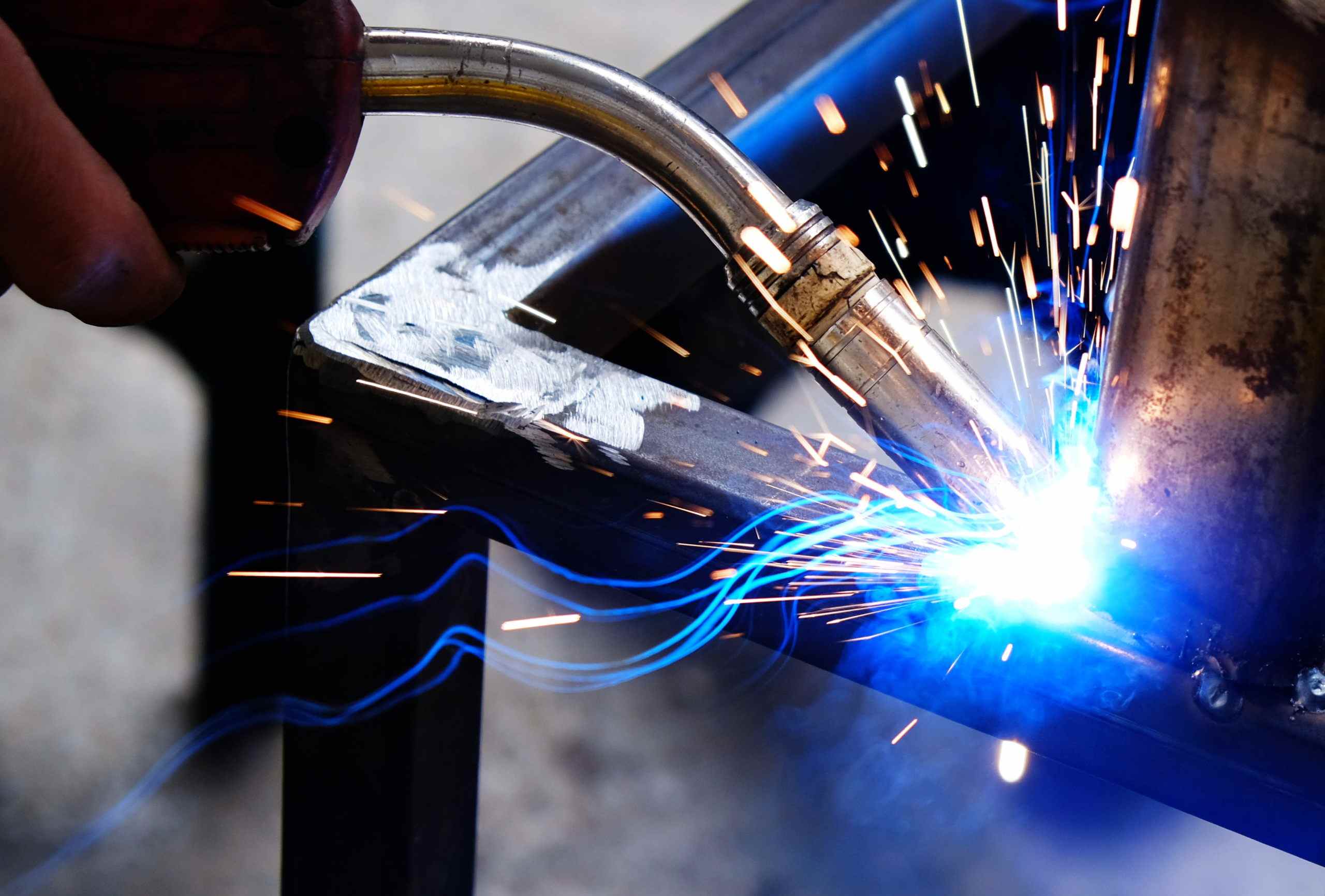
This sequence controls when metal transfers into the joint. Under comparable conditions, it may lower average heat compared with conventional spray transfer, reduce irregular short circuits, and limit spatter. It can also make the puddle feel more predictable. Those benefits depend on the program: slow travel, excessive arc length, or unsuitable consumables can still cause excess heat or poor fusion.
Decapower pairs synergic and manual control for this reason. Synergic mode creates a baseline from the selected material and wire data. Manual mode lets the operator correct that baseline for a lap joint, outside corner, repair gap, or long seam.
5 Benefits of Pulse MIG
1. A wider working window on heat-sensitive sheet
The background phase changes the energy delivered between droplets. On a well-prepared joint, this can give the operator a wider adjustment window when an aluminum edge is close to washing away or a stainless seam is building heat. Travel speed and fit-up still matter, but the puddle may be easier to manage.
2. A lower chance of burn-through or distortion—when the setup is right
Compared with a hotter continuous-spray setup, Pulse MIG may reduce the chance of burning through an edge or pulling a panel out of shape. Tack spacing, clamping, sensible bead length, and a scrap test remain important, particularly when joint gaps are inconsistent.
3. Potentially less spatter and finishing work
Controlled droplet transfer often produces less spatter than an unstable conventional MIG arc. The improvement is most noticeable when the original transfer is erratic. On visible stainless work or an automotive repair, even a modest reduction may mean less masking, grinding, and refinishing after the weld.
4. More repeatable settings for recurring parts
Small shops often repeat the same bracket, panel, or exhaust joint. A stable program is useful; being able to recall it is better. The ULTRAMIG-230 provides up to 10 memory channels, allowing a tested setup to be stored and loaded later instead of rebuilding every parameter from zero.
5. Another option for controlling bead appearance
Single Pulse controls droplet transfer. Double Pulse MIG adds a slower modulation over that cycle, changing the puddle rhythm and often creating a more pronounced ripple pattern. This can be useful on visible aluminum work, although torch movement, joint geometry, and operator consistency still shape the final appearance.
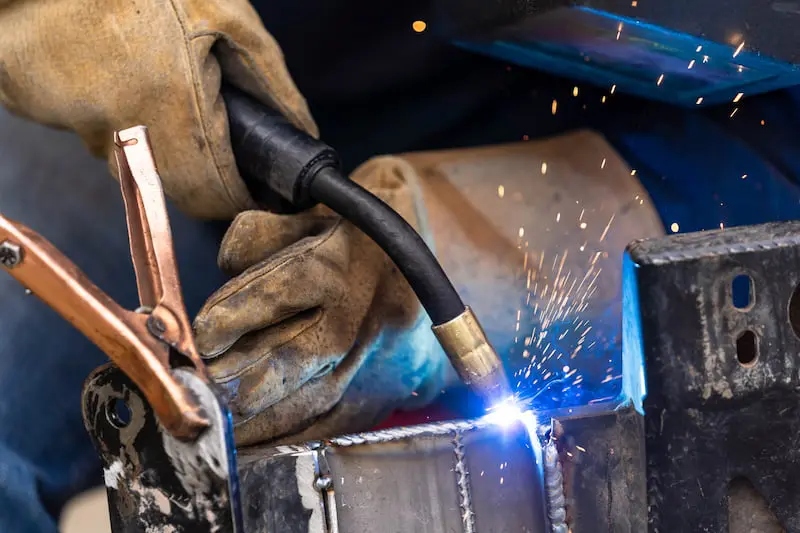
How to Choose a Pulse MIG Welder
Pulse or Double Pulse: Single Pulse may be enough for controlled transfer. Consider Double Pulse when visible bead rhythm and extra puddle modulation matter to the work.
Low-current control: Maximum amperage says little about behavior on sheet metal. Check the published range for the material and wire you intend to use, not only the highest output number.
Synergic and manual adjustment: Synergic control can shorten setup when changing materials or wire sizes. Manual adjustment matters when the preset is close but the joint needs correction.
The aluminum feed path: Confirm drive-roll groove, liner, contact tip, torch length, spool size, and whether your wire requires a spool gun or another feeding arrangement.
Duty cycle and input power: For longer welds, compare the rated duty cycle and its test conditions with your expected arc-on time. Confirm the voltage version available in your market.
Why Choose the Decapower ULTRAMIG-230?
Decapower’s ULTRAMIG-230 is a 230A platform with Pulse MIG, Double Pulse MIG, synergic and manual MIG, MMA, and Lift DC TIG. Its features suit several common small-shop jobs.
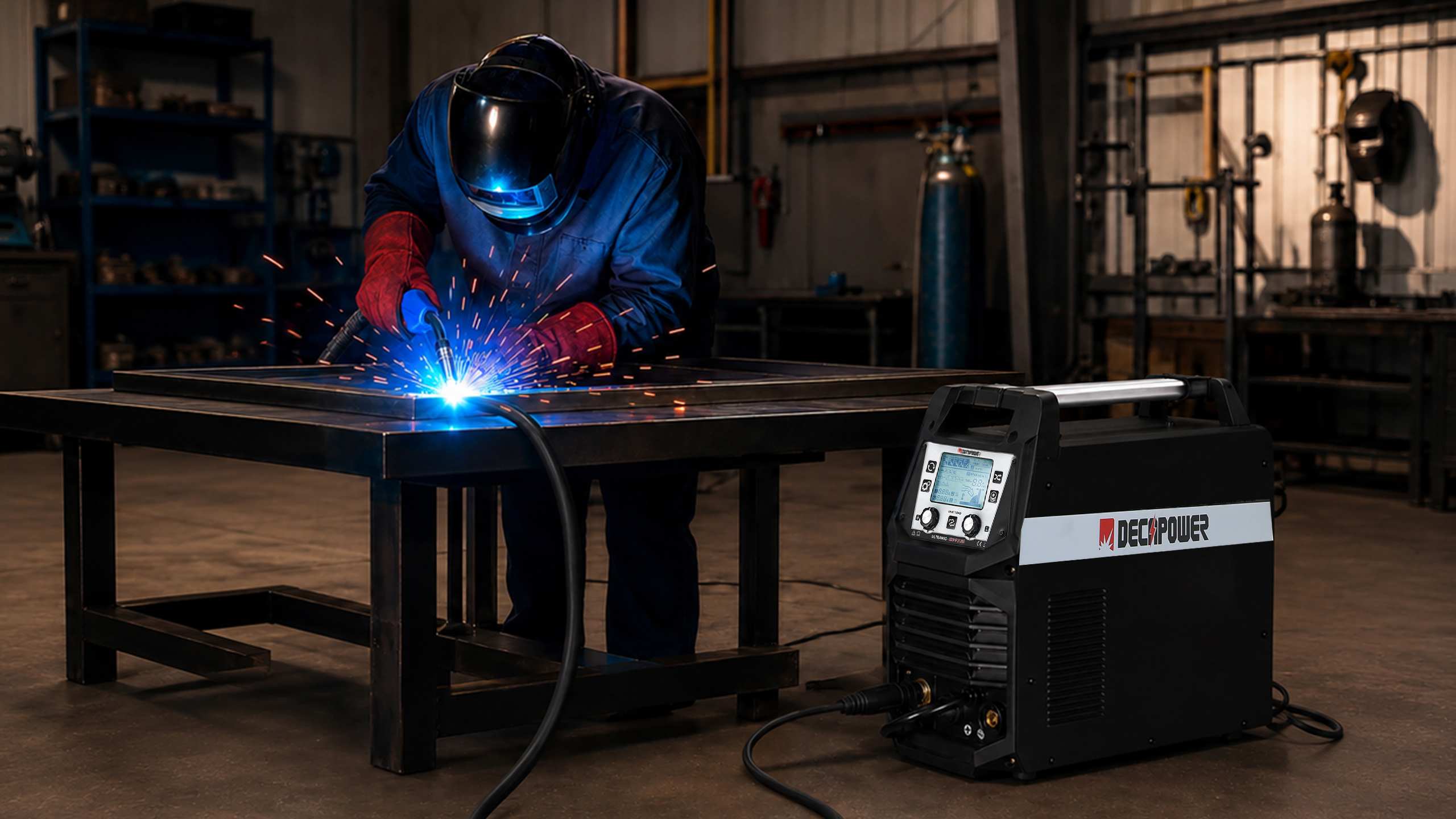
For a thin aluminum bracket or motorcycle component, Pulse mode provides controlled transfer, while the four-roll double-driven feed supports wire movement through a correctly prepared aluminum feed path. On a visible frame or panel, Double Pulse gives the operator another way to shape puddle rhythm without claiming an automatic TIG-like finish.
For repeat stainless brackets or exhaust sections, up to 10 job-memory channels can hold settings that have already been tested. The 4.3-inch-class LCD shows the selected process and parameters when moving between saved jobs. In a mixed repair shop, MIG/MAG, MMA, and Lift DC TIG allow one power source to cover several tasks with the correct accessories.
Decapower publishes a suggested wire range of 0.6–1.2 mm and a 60% rated duty cycle for the listed configuration. Its Pulse/Double Pulse chart includes selected stainless and aluminum program examples from roughly 0.8 mm to about 4.0–6.2 mm, depending on alloy and wire diameter. Treat those figures as program references: joint design, position, fit-up, input supply, gas, and technique can change the practical range.
Which Decapower Model Fits Your Work?
|
Your usual work |
A sensible direction |
| Thin aluminum or stainless where Pulse and Double Pulse are required | ULTRAMIG-230 |
| General synergic MIG/MAG plus MMA and Lift DC TIG, without a Pulse requirement | XTRAMIG-200 |
| Portable home and DIY multi-process work at lower output | LITEARC 160 |
Choose ULTRAMIG-230 when Pulse and Double Pulse are real requirements for aluminum or stainless work. Choose XTRAMIG-200 for versatile synergic MIG/MAG, MMA, and Lift DC TIG without paying for Pulse modes you may not use. Choose LITEARC 160 for portable MMA/stick welding needs in light maintenance, home, and DIY applications. In every case, check material, input power, expected arc time, portability, and the accessories included in the regional package.
Get a Recommendation Based on the Job
Not sure whether Pulse MIG, Double Pulse, or TIG fits your job? Send Decapower the material, thickness, joint type, wire diameter, input voltage, expected weld length, and required processes. This lets the recommendation begin with the application rather than the highest amperage number.
What Pulse MIG Brings to Different Users
- For Beginners & Hobbyists: Easier arc control and synergic presets reduce burn-through risks and simplify learning.
- For Professional Welders & Fabricators: Superior heat and spatter control deliver high-efficiency, clean, and visually pleasing welds.
- For Workshop Owners: Higher productivity, less post-weld grinding, and quick recall channels lower production costs and boost overall workflow.
FAQ
Q: Is Pulse MIG always better for thin aluminum?
A: No. It is one useful option. With a suitable program, stable wire feeding, correct gas, and good fit-up, Pulse MIG may make the puddle easier to handle and reduce the chance of burn-through. Poor preparation can still produce a bad weld. For delicate edges, short precision joints, or highly cosmetic work, TIG may remain the better choice.
Q: Does Pulse MIG replace TIG for aluminum and stainless steel?
A: Not completely. Pulse MIG is attractive when wire-fed speed and repeated production matter. TIG offers finer direct control and a naturally spatter-free process, which can suit precision joints and exposed edges. Many small shops use both: Pulse MIG for brackets, panels, and exhaust sections, and TIG for work that rewards slower control. The ULTRAMIG-230’s Lift DC TIG is not dedicated AC TIG for aluminum.
Q: How thick can a 230A Pulse MIG welder handle?
A: There is no single answer based on amperage alone. Our ULTRAMIG-230 shows selected stainless and aluminum program examples from roughly 0.8 mm at the low end to around 4.0–6.2 mm at the upper end, depending on alloy and wire diameter. Use those figures as references. Butt joints, fillets, single-pass work, and multipass welds may require different preparation and settings.
Q: What is the difference between Single Pulse and Double Pulse MIG?
A: Single Pulse alternates between peak and background current to control droplet transfer and reduce heat input. Double Pulse adds a secondary slower frequency modulation over that cycle. This provides extra puddle control and creates a distinct, visually pleasing ripple pattern on the weld bead, which is ideal for exposed aluminum work.