
 Войти




Decapower Курированная информация для профессионалов, хоббистов и педагогов.
Оставайтесь в курсе последней информации о новых технологиях продукции, инновациях и многом другом от промышленности сварочных машин.







Is a Multi-Process Welder Right for You? Pros, Cons, & Savings
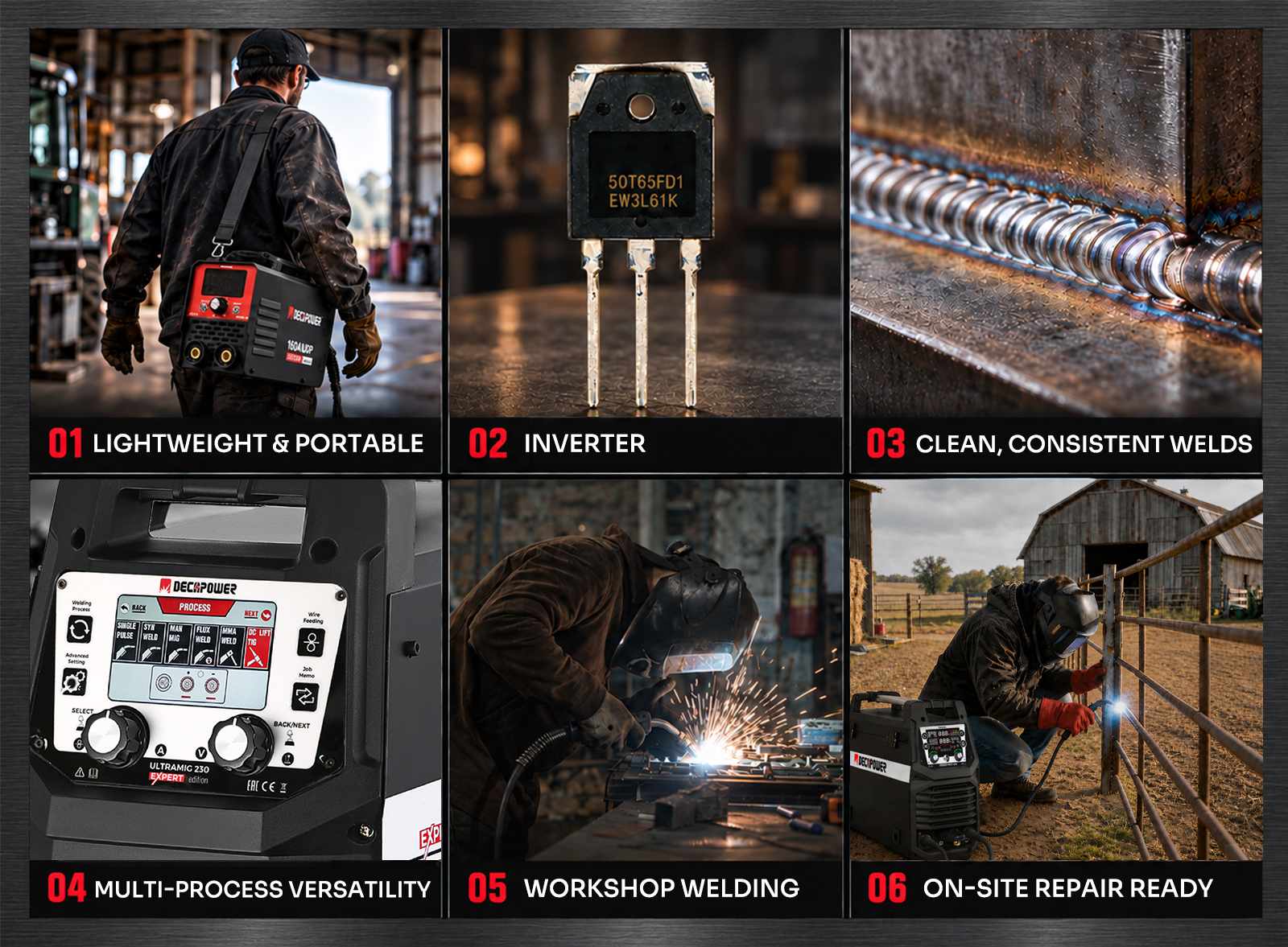
Operational bottlenecks are common for fabricators, field repairers, and workshop owners. Multi-process welder advantages and disadvantages enable enterprises to optimize their operational processes, decrease equipment costs, and increase mobility. There are various challenges in controlling several single-purpose welding power sources:
- Heavy Equipment Inventory: Welding machines (dedicated MIG, TIG, Stick, and plasma cutter) occupy valuable space in small-sized workshops.
- Truck Overloaded: Mobile service trucks become overloaded with multiple heavy machinery.
- Higher Investment Cost: The purchase of individual power supplies becomes a costly process because of higher equipment expenditure and the cost of additional welding machines.
- Lost Time: The constant process of changing power connections, gas control, and primary wires consumes precious billable time.
Декапоуэр – an ISO9001-certified worldwide manufacturing company specializing in digital inverter welding machinery and plasma cutter devices – is offering its high-tech multi-process solutions that can optimize metalworking operations. As a multi-process welding machine manufacturer in China, Decapower provides versatile equipment designed to help fabricators balance performance, portability, and long-term operating costs.
What Is Multi-Process Welding and How Does It Work?
Multi-process welding is an approach that combines various metal joining and metal cutting processes in a single small-sized, inverter-based power source. A multi-process inverter welder is a contemporary welder that uses advanced power electronics and digital microprocessors to perform multiple welding processes. Based on the design, a MIG TIG MMA welder or MIG TIG stick welder can offer various welding processes.
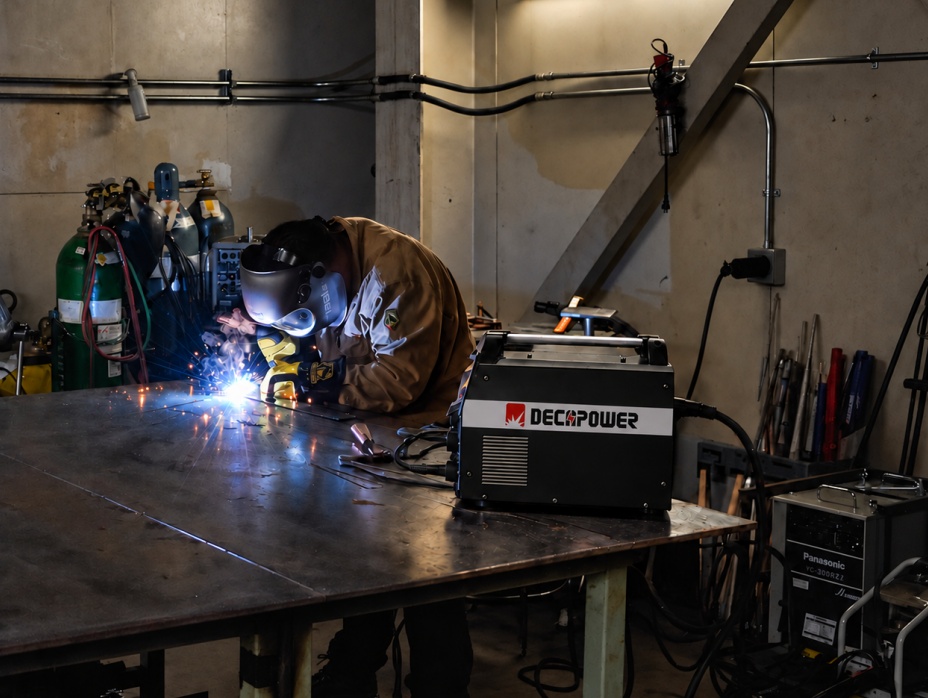
Core Mechanisms and Supported Processes
Advanced digital controls dynamically adjust voltage-current output curves to optimize arc stability for each specific welding mode.
- Gas Metal Arc Welding (GMAW/FCAW): Delivers synergic MIG/MAG and flux-cored wire feed control for fast joint deposition on mild steel, stainless steel, and aluminum.
- Gas Tungsten Arc Welding (GTAW): Provides precise DC Lift TIG or High-Frequency arc ignition for clean, high-aesthetic welds on thin-gauge metals.
- Shielded Metal Arc Welding (SMAW): Controls Stick electrode arc force and hot start parameters to weld carbon steel and structural steel outdoors.
- Integrated Plasma Cutting: Utilizes high-frequency or non-touch pilot arc technology to cleanly slice through conductive sheet metal without changing machines.
Reliability Myths Busted: Multi-Process vs. Separate Machines
A misconception among conventional welders is that they tend to fail early on account of the complexities involved in their hardware components. Modern technology and design have made this misconception irrelevant. Knowledge of multi-process welders and conventional welders assists the buyer in making an informed decision.
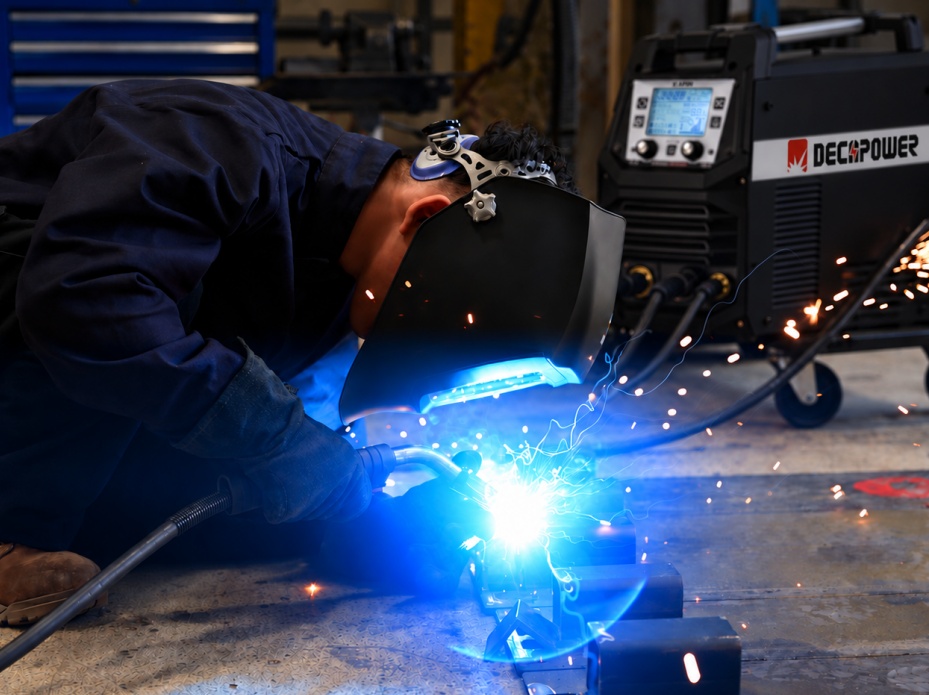
Overcoming Common Technical Misconceptions
Solid-state inverter designs and digital technology-based monitoring have improved multi-process reliability to be comparable to or better than industrial units.
- Inverter Circuit Resilience: Robust full-bridge IGBT circuits disperse the electric load evenly, protecting against thermal stress during continuous use.
- Thermal Protection of Components: Intelligent cooling paths and automatic heat sensors keep control microchips isolated from air path debris.
- Microprocessor Control: Digital program controllers operate independently for individual process parameters without mutual interference.
Pros, Cons, and Total Cost of Ownership Analysis
The evaluation of a multi-process welder cannot be done simply by considering the purchase price of the welder but should include long-term considerations such as efficiency in operation, maintenance needs, and the total cost of ownership of the multi-process welder. The pros and cons of the multi-process welder must be evaluated based on the following.
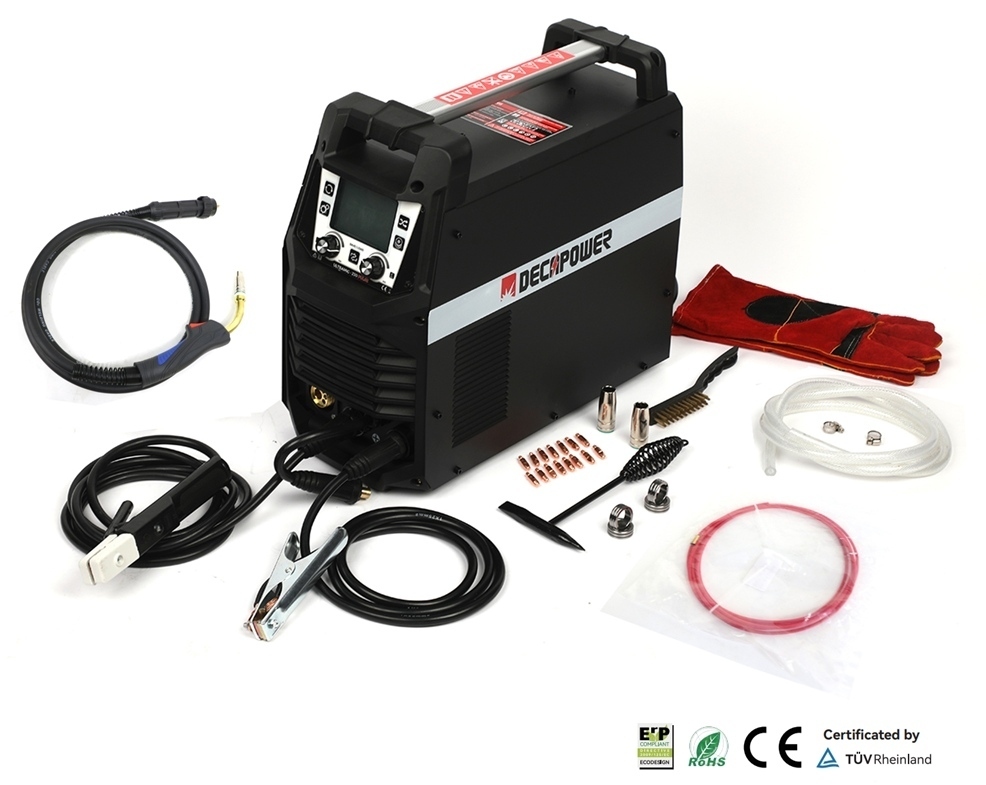
Strategic Financial and Operational Advantages
Consolidation of several manufacturing processes in one device offers instant capital and operational efficiency gains.
- Reduction of Capital Investment: An effective way to save up to 40% on investment in equipment, as opposed to acquiring separate welding machines and plasma cutting machines.
- Optimization of Work Area: Four large cabinets can be replaced by a single mobile unit, thus optimizing the space of the workshop floor.
- Reducing Consumables & Accessories Cost: Unified torch connectors and quick-select drive rolls facilitate the management of multi-process welder accessories costs.
Практично Trade-Offs and Limitations
Knowing the constraints that define their work will ensure the fabricators configure their hardware correctly for their task.
- Single-Operator Output Limitation: There is no multi-operator operation on any one project; there is only one process that can operate at a time.
- Time to Change Process Set-Up: Takes place through switching between bottles of shielding gases and switching leads for MIG, TIG, and cutting processes.
Who Benefits Most? Application Scenarios and Buying Guide
The right choice of machine should be guided by a realistic approach to the multi-process welder buying guide, based on shop size, material thickness, processes needed, and mobility. The selection of suitable welding machinery will depend on production needs and switching between applications.
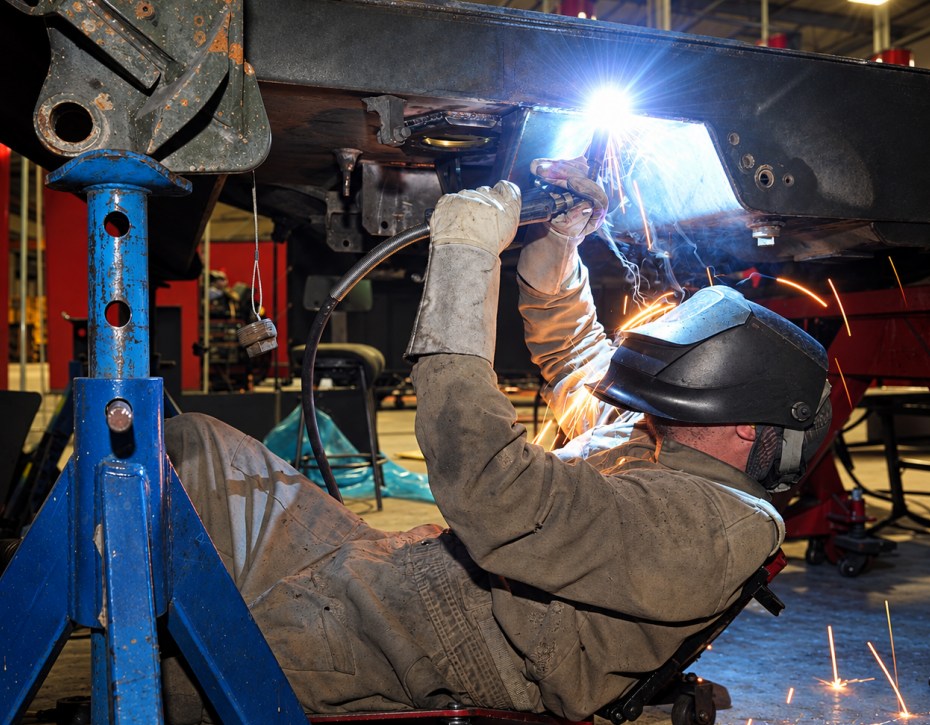
Tailored Solutions for Diverse Fabricators
Optimum matching of machine capability to demand for daily output enhances utilization.
- Mobile Welders/Technicians: The multi-process welder for mobile welding will be able to resolve payload issues in service trucks for welding on site because only one type of welding machine will be transported.
- Light Industrial & Small Fabrication Workshop Applications: The multi-process welder for small workshop applications would make versatile work in different repair jobs like sheet-metal ducts and heavy-duty brackets. A multi-process welder for fabrication workshop applications can also help to consolidate machinery needs.
- Hobbyist & Do-it-yourself enthusiasts: Synergic interfaces for easy operation help beginners to do MIG, TIG, and Stick using the same machine.
Selecting the Right Decapower Equipment
Decapower manufactures specific digital power supplies engineered to solve diverse shop challenges.
- ФУЗИОН ПМКТ-2056-in-1 Unit: Combines MIG (Syn/Man/Pulse), MMA, HF TIG, and HF Plasma Cutting in one portable box, solving field cutting and joining needs. Its multi-process configuration offers a practical option for buyers seeking a versatile MIG TIG MMA welder combo with integrated cutting capability.
- ULTRAMIG-230 ЭкспертDouble Pulse Unit: Features a full-bridge circuit, 4-inch LCD display, 10 customized job memo channels, and a 4-roller dual-driven wire feeder to eliminate aluminum burn-through and spatter.
- КСТРАМИГ-200Synergic Inverter Unit: Incorporates an active synergy MCU program controller for quick selection across solid wire, stainless steel, flux-cored wire, and aluminum sheet welding.
Customized Support for Every Metalworker
Irrespective of whether you’re running a stand-alone repair vehicle or you’re handling a worldwide brand name in machinery, the selection of the right energy source is key to the successful running of your operations. Decapower offers product advice, specially tailored for every level of the metalworking sector.
Solutions for Your Specific Workflow
Decapower adapts technical solutions to serve fabricators, enterprise clients, and commercial distributors worldwide.
- For Independent Fabricators and Repairers: Provides user-friendly digital equipment equipped with reliable active synergy control to complete projects faster.
- For Global Distributors and OEM/ODM Partners: Delivers customized hardware configurations, customized branding, customized packaging, and factory-direct technical engineering support.
Часто задаваемые вопросы
Q: How are synergic MIG and manual MIG different from one another?
A: While synergic MIG adjusts the wire feed rate and voltage match through pre-programmed microprocessor curves, in manual MIG both of these processes need to be adjusted manually.
Q: Is it possible for multi-process welders to perform welding on aluminum sheets?
A: Multi-process machines having either Pulse or Double Pulse MIG settings have the capability of producing precise heat, thus avoiding burn-through and spatter on aluminum.
Q: What is meant by the term “duty cycle rating,” and why is it essential for small shops?
A: Duty cycle rating refers to the percentage of time within 10 minutes that a welder can operate at the desired level of current without activating the thermal overload protection. This will enable small shops to select machines suitable for their workload.
Q: How does the non-touch pilot arc plasma cutting help in the process of metal cutting?
A: The non-touch pilot arc method starts the cut without requiring the tip of the torch to touch anything, thereby increasing the lifetime of the consumables and helping to cut on surface without damaging it.