
 Sign in












Decapower Curated information for Professionals, Hobbyists & Educators.
Stay up to date with the latest information on new products technology,innovations and more from Welding Machine Industry.







Digital vs Analog Welder: Why MCU Gives You a Smoother Arc
The Frustrating Reality of Unstable Welding Arcs
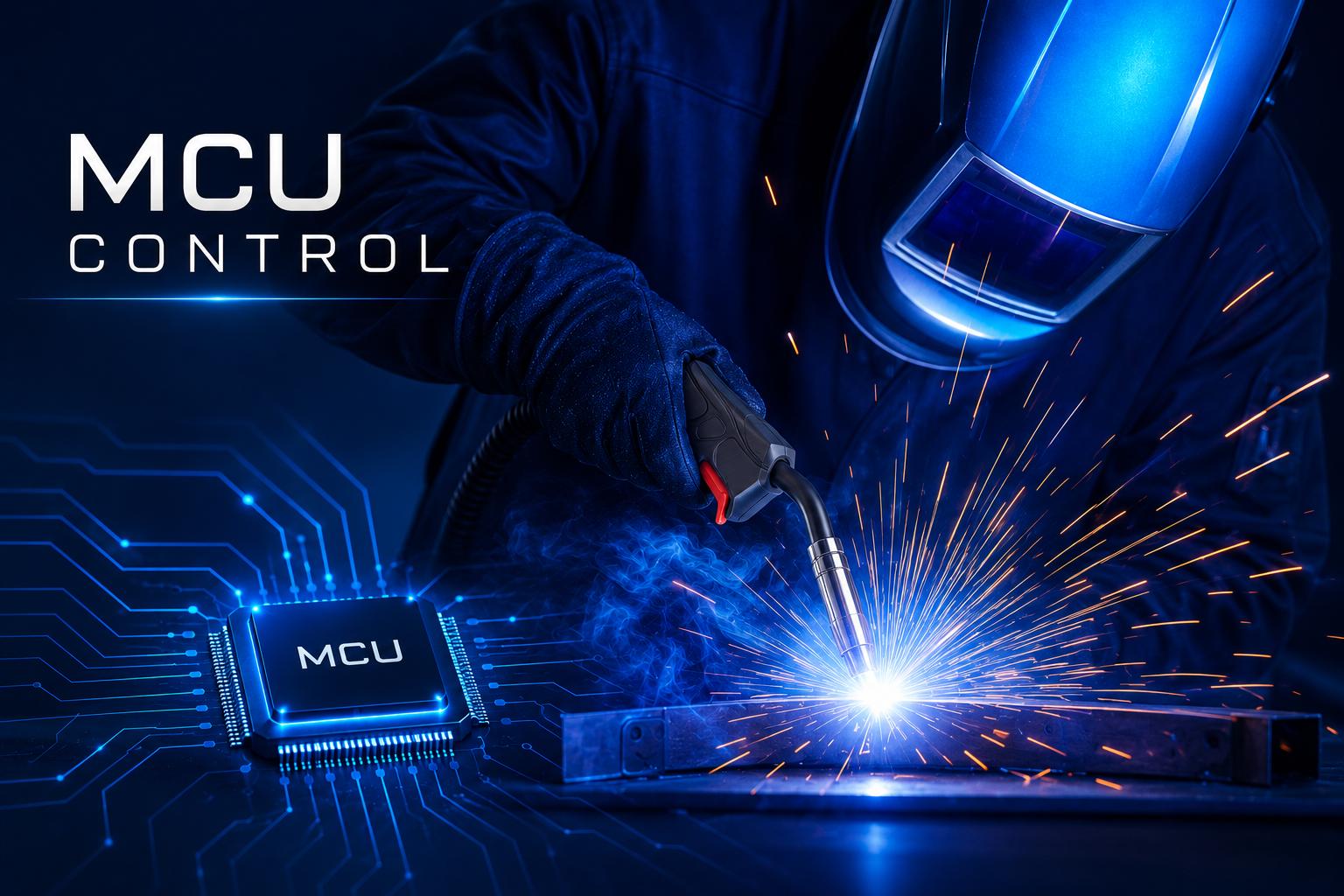
Every professional welder, workshop owner, and industrial distributor knows the headache of an inconsistent welding arc. You are mid-weld on a critical component, and suddenly the voltage dips, the wire stutters, or a massive shower of spatter ruins the surface finish.
The Hidden Costs of Arc Fluctuations
These erratic behaviors are not always the fault of the operator; often, they are the technical limitations of an outdated power source.
- Excessive Post-Weld Cleanup: High spatter forces operators to spend valuable hours grinding and chipping away debris instead of welding.
- Burn-Through on Thin Materials: Traditional machines struggle to maintain low-amperage stability, frequently destroying thin sheet metals.
- Inconsistent Penetration: Fluctuating arcs create weak spots in the joint, leading to costly rework or failed quality inspections.
To solve these persistent industry challenges, Decapower has pioneered advanced multi-process welders. By shifting from older analog designs to pure Microcontroller Unit (MCU) digital control, we ensure your welding arc remains flawlessly smooth under any workload.
Inside the Machine: Analog Circuits vs. MCU Pure Digital Control
Understanding the core technology behind your power source is essential to choosing the right equipment for modern production environments.
The Limitations of Traditional Analog Adjustments
Traditional welding machines rely heavily on analog circuits, utilizing potentiometers, capacitors, and resistors to regulate welding parameters.
- Component Aging and Drift: Analog components change their electrical properties over time due to heat exposure, leading to inconsistent outputs.
- Slow Response Times: Analog feedback loops take milliseconds to react to a changing arc gap, which is simply too slow to prevent spatter.
- Limited Parameter Tuning: Operators can only adjust basic voltage and wire feed speed, with no ability to control complex wave shapes.
How an MCU Chip Standardizes Precision
An MCU pure digital control circuit operates like a high-speed supercomputer dedicated entirely to your welding arc.
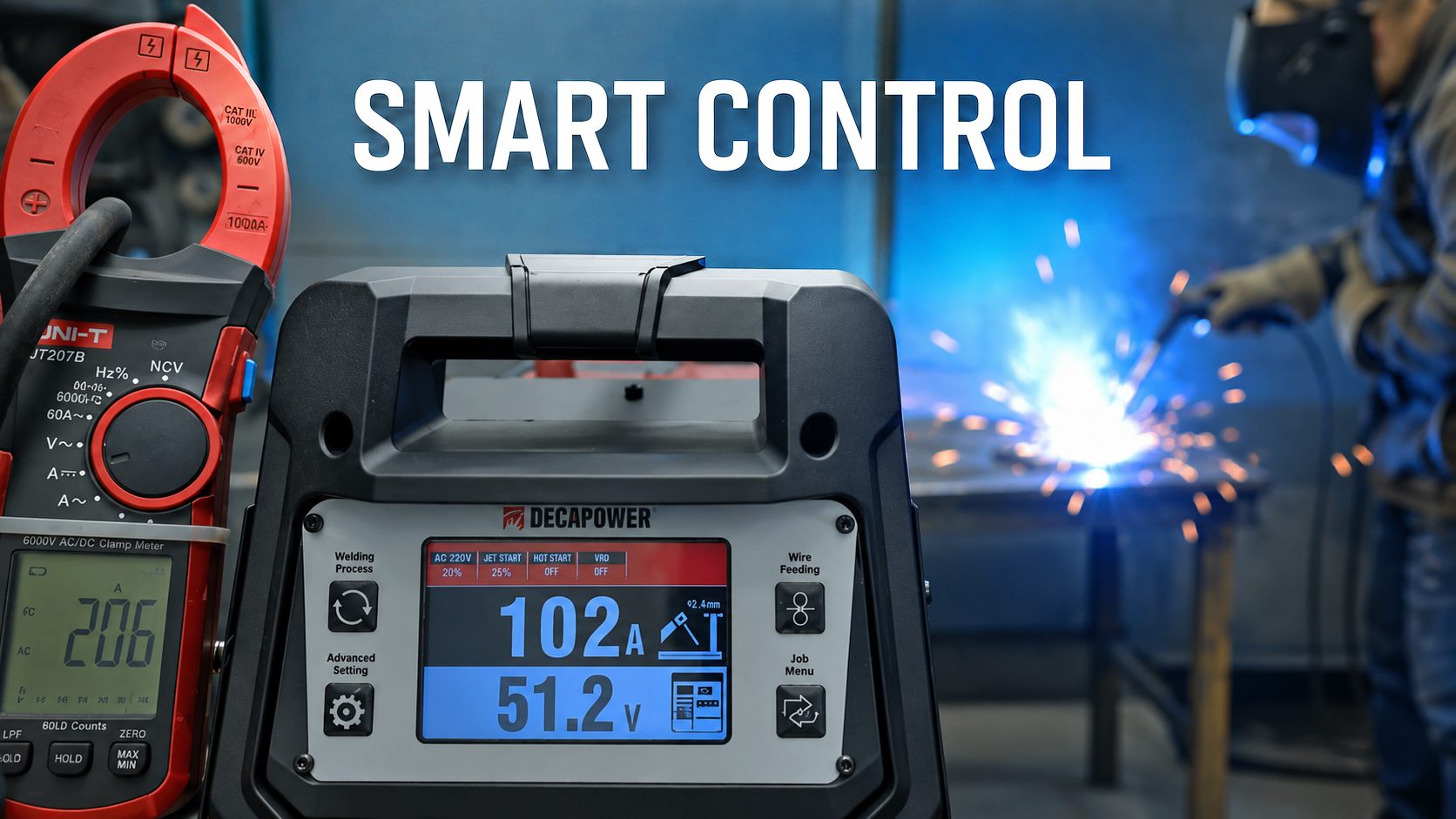
- Microsecond-Level Adjustments: The MCU samples the arc voltage and current tens of thousands of times per second, correcting deviations instantly.
- Pure Digital Waveform Control: Advanced algorithms manage droplet transfer dynamically, ensuring a perfectly stable arc length.
- Perfect Multi-Process Synergic Logic: When you adjust the thickness or current, the chip automatically pairs the optimal voltage and feed rate.
How Decapower Transforms Your Welding Experience
Concept definitions mean nothing without real-world performance; here is how Decapower’s digital technology solves your daily fabrication bottlenecks.
Mastering Aluminum and Thin Metals with ULTRAMIG 230 Pulse Control
Welding thin aluminum sheets is notoriously difficult due to its high thermal conductivity and low melting point, often resulting in severe warping or burn-through.
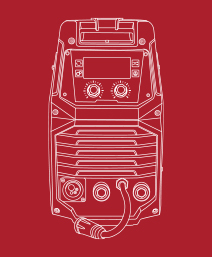
- The Solution: The Decapower ULTRAMIG 230utilizes a full-bridge circuit and pure digital control to deliver precise Pulse and Double Pulse MIG welding.
- How It Works: The MCU alternates rapidly between a high peak current for penetration and a low base current to let the puddle cool down.
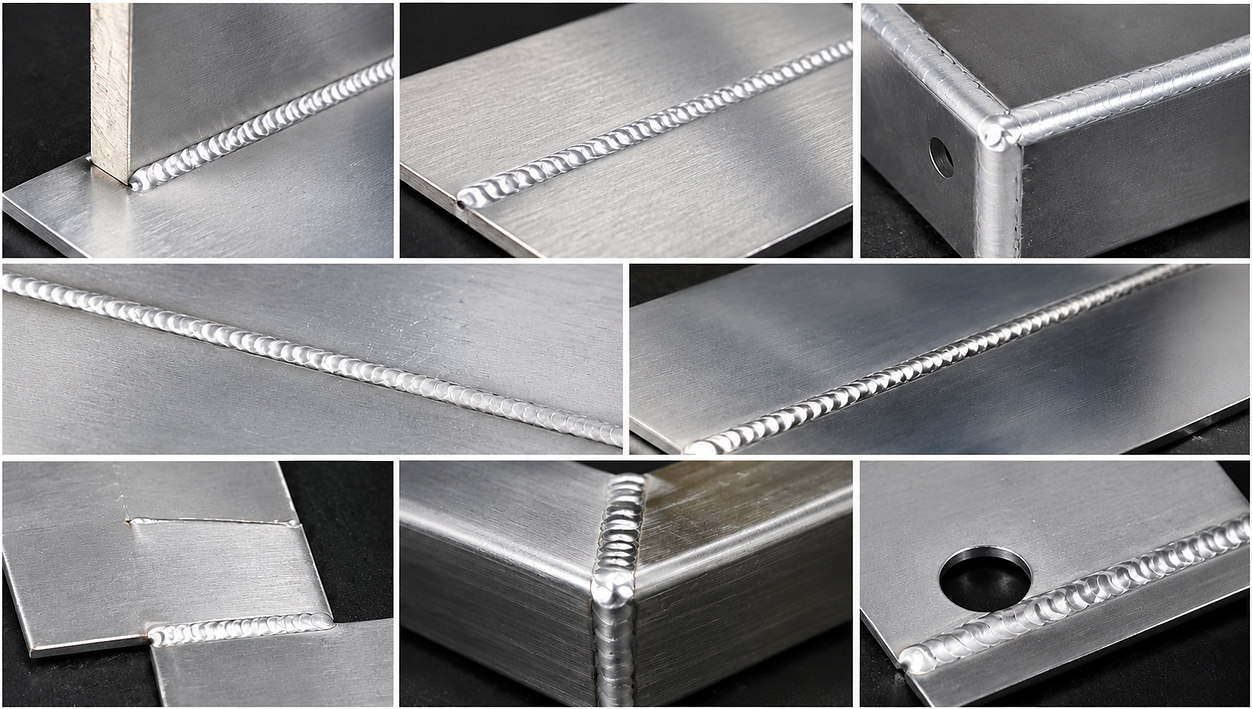
- The Result: Zero-spatter aluminum welds with a beautiful “stacked-dimes” appearance, eliminating thermal distortion on sheets as thin as 1.0mm.
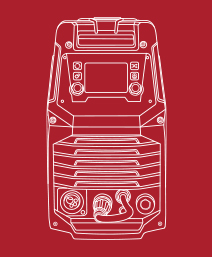
Multi-Process Efficiency with PMCT-205 Digital Integration
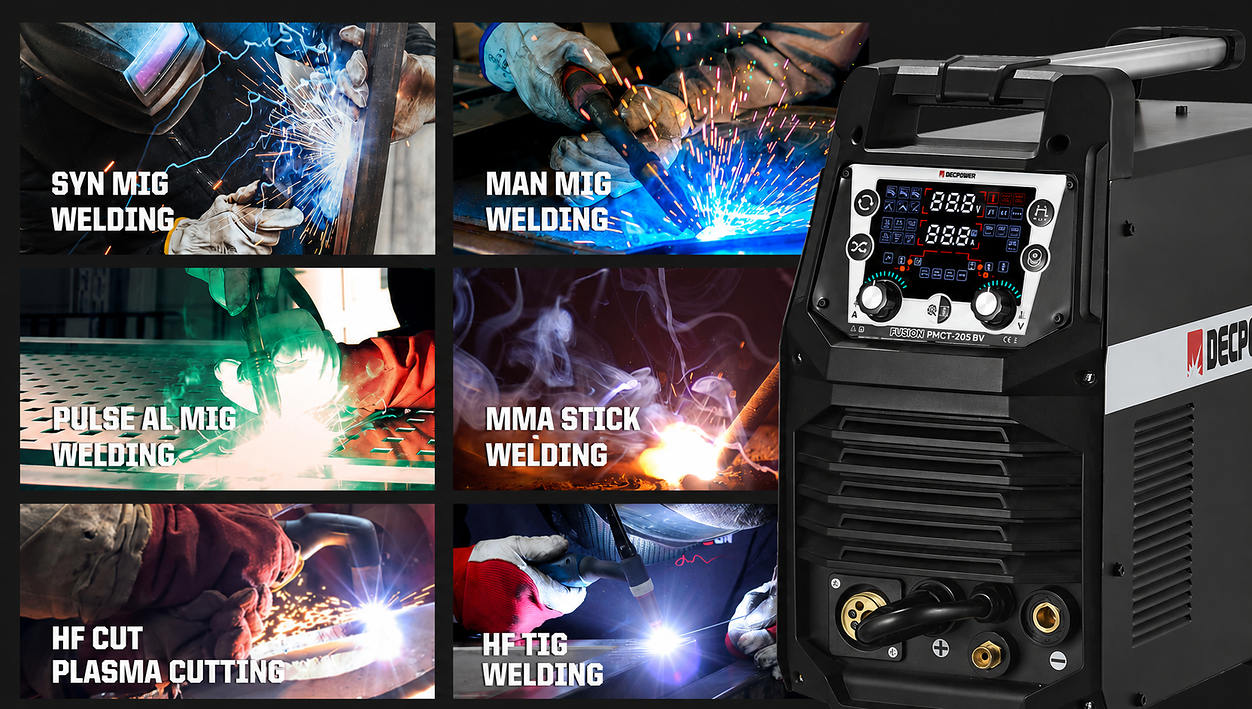
Industrial job shops frequently switch between MIG(SYN), MIG(MAN), MIG(PULSE), MMA, HF TIG, and HF CUT, which historically required maintaining four separate bulky machines.
- The Solution: The Decapower PMCT-205combines all four essential fabrication processes into one lightweight, digitally managed housing.
- How It Works: A 4.3-inch smart LCD interface feeds user commands directly to an integrated MCU chip, instantly reconfiguring internal circuit logic.
- The Result: A technician can plasma cut a steel bracket, switch modes to weld it via MIG, and complete precise root passes with TIG using a single power source.
Compliance, Quality, and Tailored Engineering for Global Markets
Decapower goes beyond standard manufacturing by ensuring absolute safety, strict regulatory compliance, and deeply integrated customization options.
Certified Engineering Meeting Rigid European Standards
Entering the stringent European market requires a guarantee of elite electrical engineering, safety protocols, and electromagnetic compatibility.
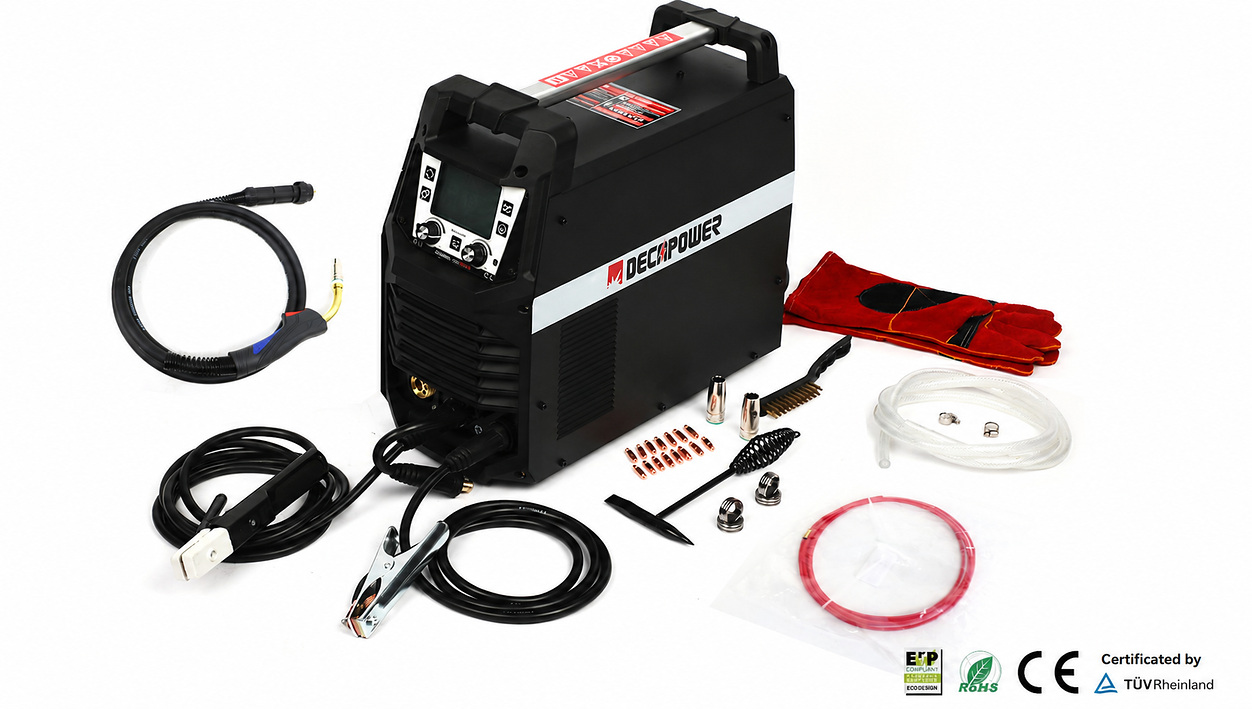
- Rigorous Certifications: Decapower high-end multi-process weldersare built from the ground up to be fully compliant, ensuring you receive a CE-certified welding machine built for industrial longevity.
- Guaranteed Site Safety: Our high-end multi-process welderfeatures the LVD / EMC certified welding machine seal, meaning it will not suffer from or cause electromagnetic interference on busy job sites.
- Seamless Importation: Distributors can rest assured knowing they are buying a CE-approved welder for Europe that is fully welding machine compliant with EU standards.
- Universal Standards: From an arc welder with CE marking to a heavy-duty CE-compliant MMA / MIG / TIG welder, our hardware meets every global benchmark.
Customized Hardware and Software Solutions
We understand that standard, off-the-shelf welder does not always meet the unique operational challenges of large-scale enterprises or specialized brands.
- Bespoke Software Tuning: Our dedicated R&D team can deliver customized synergic curves and software parameters tailored to your specific wire alloys or gas mixtures.
- Tailored Brand Identity: We offer customized exterior aesthetics, logo placement, and packaging to help global distributors establish an exclusive market presence.
- Hardware Modifications: From unique plug configurations to customized duty-cycle optimizations, we modify internal cooling and layout to match your regional climate.
Upgrade Your Welding Capabilities Today
The era of guessing your parameters on unstable analog machines is over. Decapower’s digital MCU technology delivers the precision, repeatability, and smooth arc your business needs to stay competitive.
- For Industrial Distributors: Partner with us to provide your local market with a highly reliable CE-approved welder for Europe, backed by our professional customized OEM/ODM manufacturing capability.
- For Workshop Owners & Factories: Minimize post-weld grinding costs, boost your output efficiency, and ensure maximum operator safety with our LVD / EMC certified welding machine solutions.
- For Professional Fabricators: Take total control of your craft on aluminum, stainless, or carbon steel with the zero-spatter performance of the ULTRAMIG 230 and PMCT-205.
Contact Decapower today to receive a personalized quote or discuss your brand’s customized equipment requirements!
FAQ
Q: Why does an MCU-digitally controlled welder produce significantly less spatter than an analog welder?
A: Analog welders respond slowly when short circuits occur during droplet transfer. The MCU chip picks up these arc shifts within microseconds. It pulls back the current at once before the droplet bursts. This removes spatter right at the start.
Q: Can an analog welding machine accurately perform pulse or double-pulse welding on aluminum?
A: No. Good pulse welding needs exact and fast switches between peak and base currents. Analog circuits face drift in parts along with slower reactions. They fail to keep the tight waveform control that aluminum jobs require.
Q: What are the practical benefits of importing a welding machine compliant with EU standards?
A: Machines that meet EU rules go through tough checks on electrical safety under LVD and on electromagnetic compatibility under EMC. Operators avoid risks from hazards. The unit stays clear of interference with other digital tools. Customs clearance then moves ahead with no legal blocks.
Q: How does a pure digital “synergic” system help a beginner welder compared to manual analog dials?
A: In an analog system, the user must manually balance voltage and wire speed via guesswork. A digital synergic system automatically calculates the exact voltage, amperage, and wave parameters instantly based on the selected material thickness, guaranteeing a perfect arc immediately.