
 Sign in

Decapower Curated information for Professionals, Hobbyists & Educators.
Stay up to date with the latest information on new products technology,innovations and more from Welding Machine Industry.





Dual Voltage (110V/220V) Welding: Why Flexibility is Non-Negotiable
Have you ever pulled up to a work location with your sturdy welding equipment, only to discover the sole available outlet is a common 110V household type? In the past, welders often had to decide between compact low-voltage units that were easy to move and powerful 220V machines meant for heavy industrial jobs. Today, in the quick-moving fields of building and fixing, settling for that kind of limitation no longer makes sense. Being able to handle both voltages stands as a must-have for welders who take their work seriously.
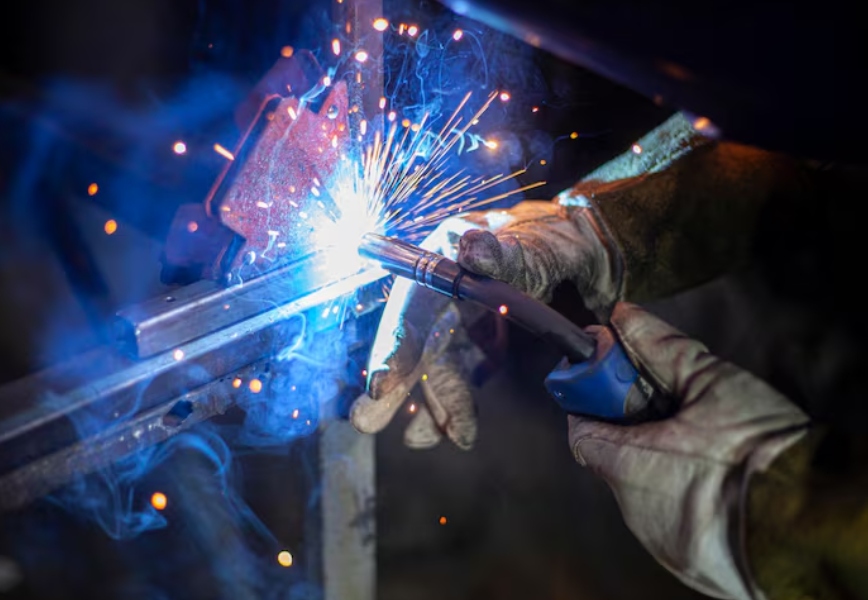
At Decapower, we have put more than ten years into developing digital welding tools as a respected maker in this area. Our aim stays simple: turn welding into something straightforward, whether for casual users or full-time experts. We combine solid MCU digital systems with genuine dual-voltage support so the equipment fits the spot you are in, rather than making you chase down special power.
The Strategic Advantage of Dual Voltage Flexibility
Dual voltage proves vital mainly because job sites shift so much these days. Mobile fixers and shop operators alike gain a real upper hand when they can connect to whatever outlet exists without tripping breakers or watching the arc fade away.
Bridging the Gap Between Home and Industry
Machines rated for 110V and 220V let you handle lighter work on regular house current—well-suited to thin panels or personal builds—then move up to 220V for stronger joins on thicker pieces. Owning one unit that covers both ends means fewer purchases overall and less clutter in storage areas or vehicles. A newcomer, for example, can begin with basic home fixes using a wall socket and move on to bigger commercial jobs later without buying separate power-hungry gear.
Stability in Remote Locations
Lots of repairs take place away from reliable mains, such as mending machinery on farms or putting up structures in open areas. Generators become the main supply in those cases. Decapower designs account for the minor voltage changes that generators often show. The IGBT parts hold up well and stay steady, which keeps the inverter working smoothly through long, hard sessions common in field or heavy-duty settings.
Decapower’s Representative Dual Voltage Solutions
To illustrate how this switchable power works in practice, consider three models from our selection that tackle everyday tasks head-on.
The Multi-Process Master: SYNCMIG-200
The Fusion SYNCMIG-200 delivers strong performance for users who change between GMAW (MIG), SMAW (MMA), and GTAW (TIG) quickly.
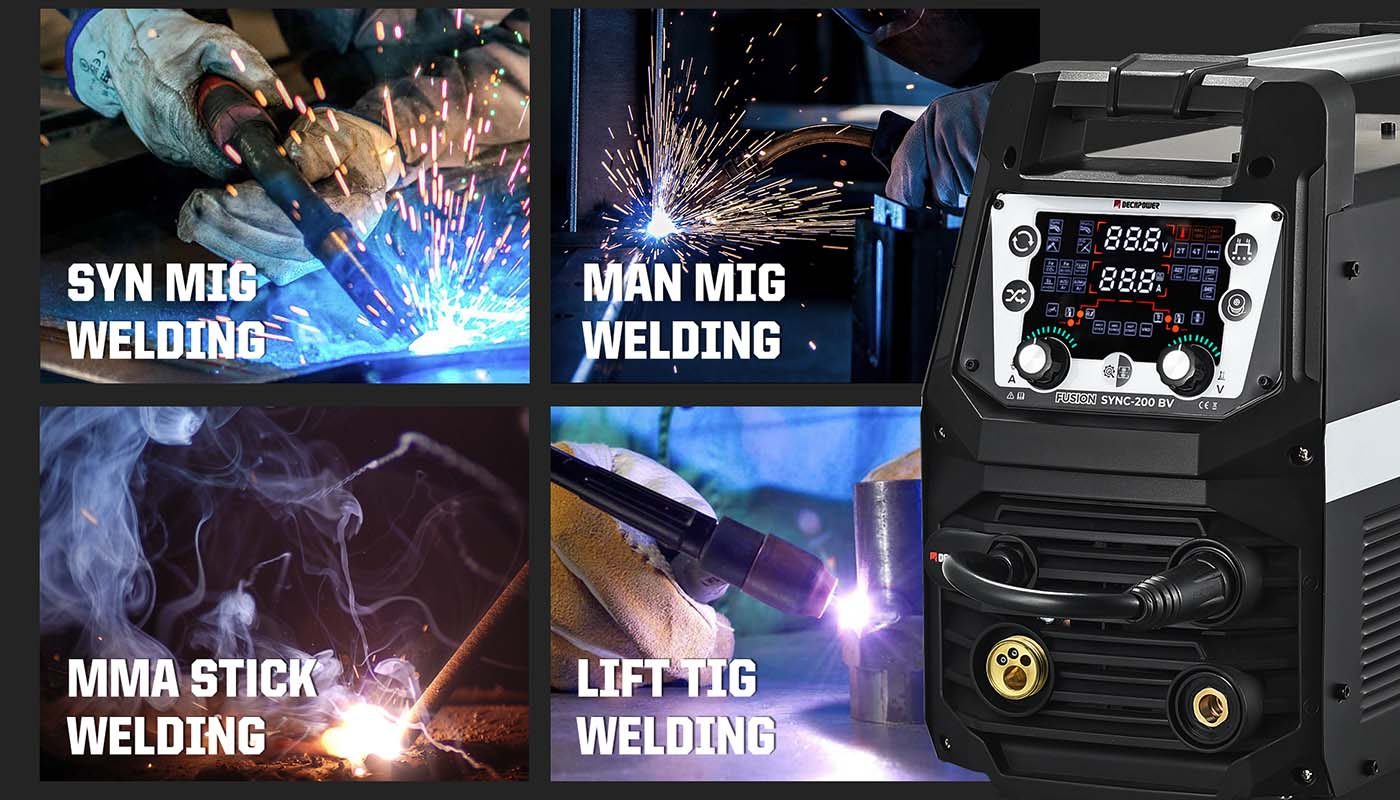
- Key Features & Advantages: A straightforward LED screen pairs with Active Synergy technology. Picking your wire thickness and base metal, the unit then sets the feed rate and voltage to match. That single-knob setup helps newcomers avoid common setup mistakes and keeps the arc consistent.
- Application Scenario: In a modest car restoration garage, the operator may run on 110V for careful work on body panels to prevent holes from overheating, then shift to 220V when reinforcing a thick frame rail. The Fusion SYNCMIG-200 eliminates the need for separate rigs when dealing with varying steel gauges or aluminum sections.
The Portable Stick Powerhouse: ECOARC Series (BV Model)
The ECOARC line stands out for portable MMA (Stick) tasks, and the BV version handles both voltage inputs right from the design.
- Key Features & Advantages: IGBT inverter construction uses a half-bridge setup, so the machine stays light and simple to haul around. Helpful additions include Hot Start, which delivers a brief burst of extra current to ignite the arc quickly; Arc Force, which automatically adjusts to prevent rod sticking mid-weld; and Anti-Stick, which reduces power output if sticking occurs, so you can free the rod easily.
- Application Scenario: For sudden breaks in farm fencing or livestock enclosures out in distant fields, connect the ECOARC to a generator on hand. It runs rods that normally prove tricky in wet grass or on dirty surfaces, producing firm, lasting welds without repeated arc restarts.
The Smart Entry Champion: EASYMIG-140
For those seeking solid results in a small, home-compatible package, the EASYMIG-140 serves as a strong pick. This 4-in-1 multi-process unit brings synergic ease to regular users.
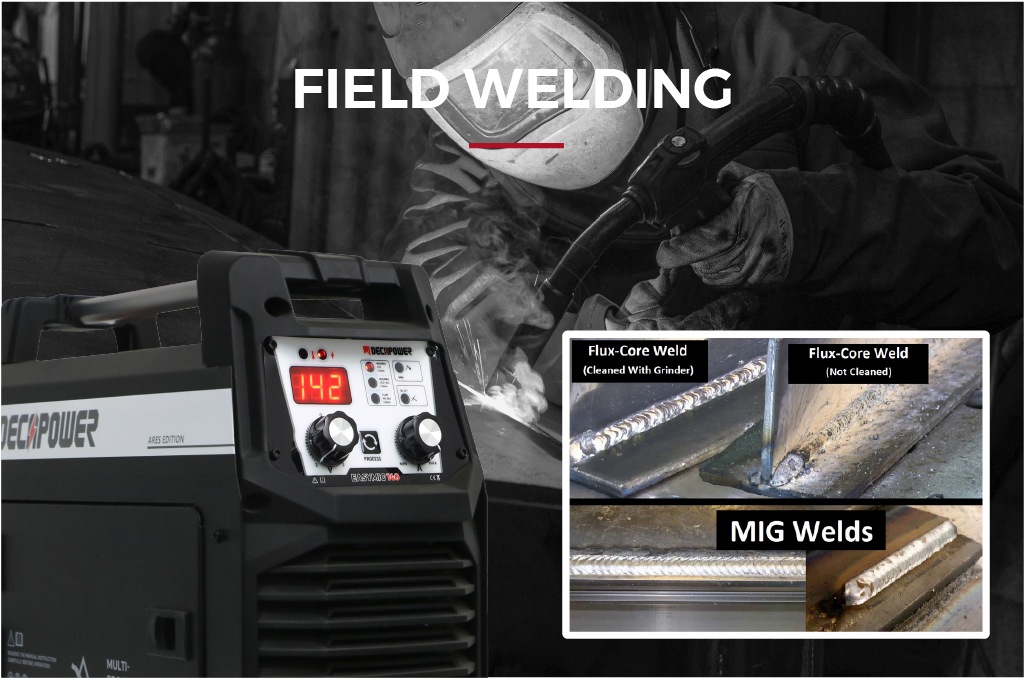
- Key Features & Advantages: It supports wide single-phase voltage (220V) or Bivolt (127V/220V) inputs. Full digital MCU oversight runs automatic synergic programs. One-Key mode lets even first-timers select wire size and gas type quickly, almost like basic stick work. Built-in safeguards cover excess heat, overload, and voltage spikes for years of steady service.
- Application Scenario: Home hobbyists or apartment maintenance crews often lack 220V access. Plug the EASYMIG-140 into a standard 110V or 127V outlet to build a yard gate or simple metal furniture. It removes the old barrier of needing heavy industrial circuits for clean MIG or TIG beads, delivering quick, pro-level results in tight home spaces.
Customized Solutions for Global Partners
Markets differ in what they require. Decapower, therefore, skips purely standard offerings. Our R&D crews draw on years of supplying welding solutions to major global firms. They stand prepared to adjust voltage specs for particular regions or change outer styling to fit your branding. OEM and ODM paths cover those details. We also set up distribution arrangements that align with buying patterns in your area and match local grid realities.
Why Choose Decapower?
Decapower follows an “Inside-Thinking” way—we track the daily hurdles welders meet and refine gear accordingly from their input. Production holds ISO9001 certification, and each machine undergoes full checks from assembly through packing. That process keeps your purchase protected, consistent, and built for the long run.
High-grade IGBTs, smart cooling fans, and reliable wire drives form the core build. We work toward making welding straightforward for all, so beginners and pros both weld freely wherever the job takes them.
Ready to add that range?
Stop allowing outlets to hold back your output. Check out our entire line of dual-voltage multi-process welders right away.
[Click here to visit our Online Shop or Contact Us for a Customized Quote!]
FAQ
Q: Does using 110V instead of 220V affect the duty cycle of the welder?
A: Yes. On 110V, peak current usually stays lower (around 120A, for instance) than on 220V (often near 200A). Hard use at the lower input shortens duty cycle—the share of a ten-minute span the machine can weld continuously—compared to 220V runs.
Q: Is it safe to run a dual-voltage digital welder on a portable generator?
A: Yes, as long as the generator delivers steady, adequate power. A weak or undersized unit risks an unstable supply that harms the inverter electronics over time.
Q: Why is “Synergic” control better for beginners in a dual-voltage environment?
A: Active Synergy links voltage and wire feed automatically. One-knob adjustment cuts out parameter hunting for new users, holding a steady arc across different power levels and thicknesses.
Q: What is the benefit of a Multi-Process machine like the EASYMIG-140 for home use?
A: It packs MIG, MAG, MMA, and Lift TIG into one compact case. That setup welds steel, stainless, and aluminum without extra units. Running on ordinary household voltage (110V/127V) opens professional-grade work to garage or residential settings.