
 Accedi




Decapower Informazioni curate per professionisti, appassionati e educatori.
Rimani aggiornato con le ultime informazioni sulla tecnologia dei nuovi prodotti, le innovazioni e molto altro dall'industria delle macchine per saldatura.







Say Goodbye to Soot: How Double Pulse MIG Ensures Cleaner, Stronger Aluminum Welds
Many welders consider aluminum the toughest material to handle. It conducts heat very quickly, has a thin oxide layer that melts at a far higher temperature than the base metal, and leaves behind that annoying black soot or smut on the finished bead far too often. That soot goes beyond looks alone. It usually points to poor gas coverage or too much heat, which weakens the joint and demands long hours of cleanup afterward.
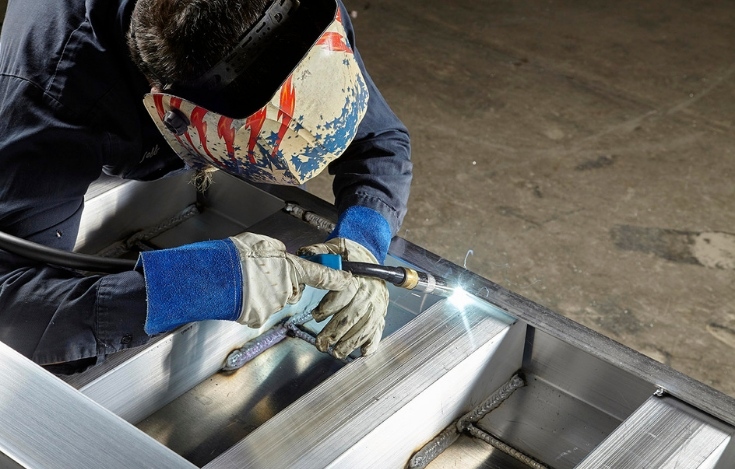
Al Decapower, our team has spent more than ten years studying ways that digital MCU-controlled machines can make these difficulties much simpler. The real breakthrough comes from Double Pulse MIG technology. This method delivers the careful control normally seen in TIG welding, but keeps the faster pace typical of MIG.
The Science of Clean: How Double Pulse MIG Works
Standard MIG welding relies on steady voltage. That approach often overheats aluminum, causing burn-through or heavy spatter. Double Pulse MIG marks a clear step forward. During the process, the welding current switches quickly back and forth between a strong peak current and a lower background current.
Precision Current Control
The peak current melts the metal properly and drives deep penetration. Meanwhile, the background current keeps the arc going steady while giving the weld pool a brief chance to cool. This fast switching, which occurs hundreds of times each second, stirs the weld pool like a gentle shake. Impurities rise to the top more easily, and soot buildup drops sharply.
Thermal Management
Aluminum soaks up heat fast, almost like a heat sink. Apply excessive heat, and the whole piece swells or distorts. Use too little, and cold-start problems appear. Double Pulse adds extra control to the arc. That extra control produces the neat “stacked-dimes” bead shape once achievable only through slow, careful TIG work.
Precision Engineering: The Decapower Product Lineup
Solid results depend on hardware that matches the intelligence of the software. Decapower has built two main models tailored to handle aluminum’s tricky behavior.
ULTRAMIG-230 EXPERT: The Aluminum Specialist
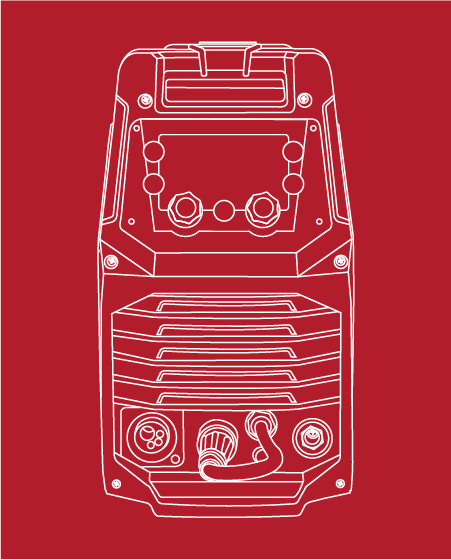
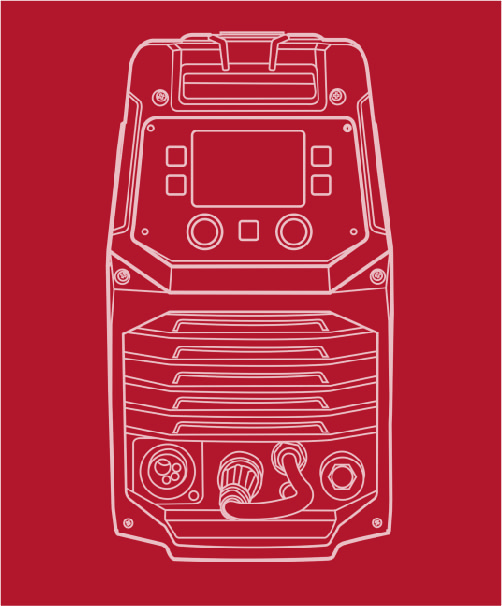
Il ULTRAMIG-230 esperto serves as our top choice for light industrial aluminum jobs. It relies on a full-bridge circuit along with complete digital control, delivering an arc that stays both accurate and steady.
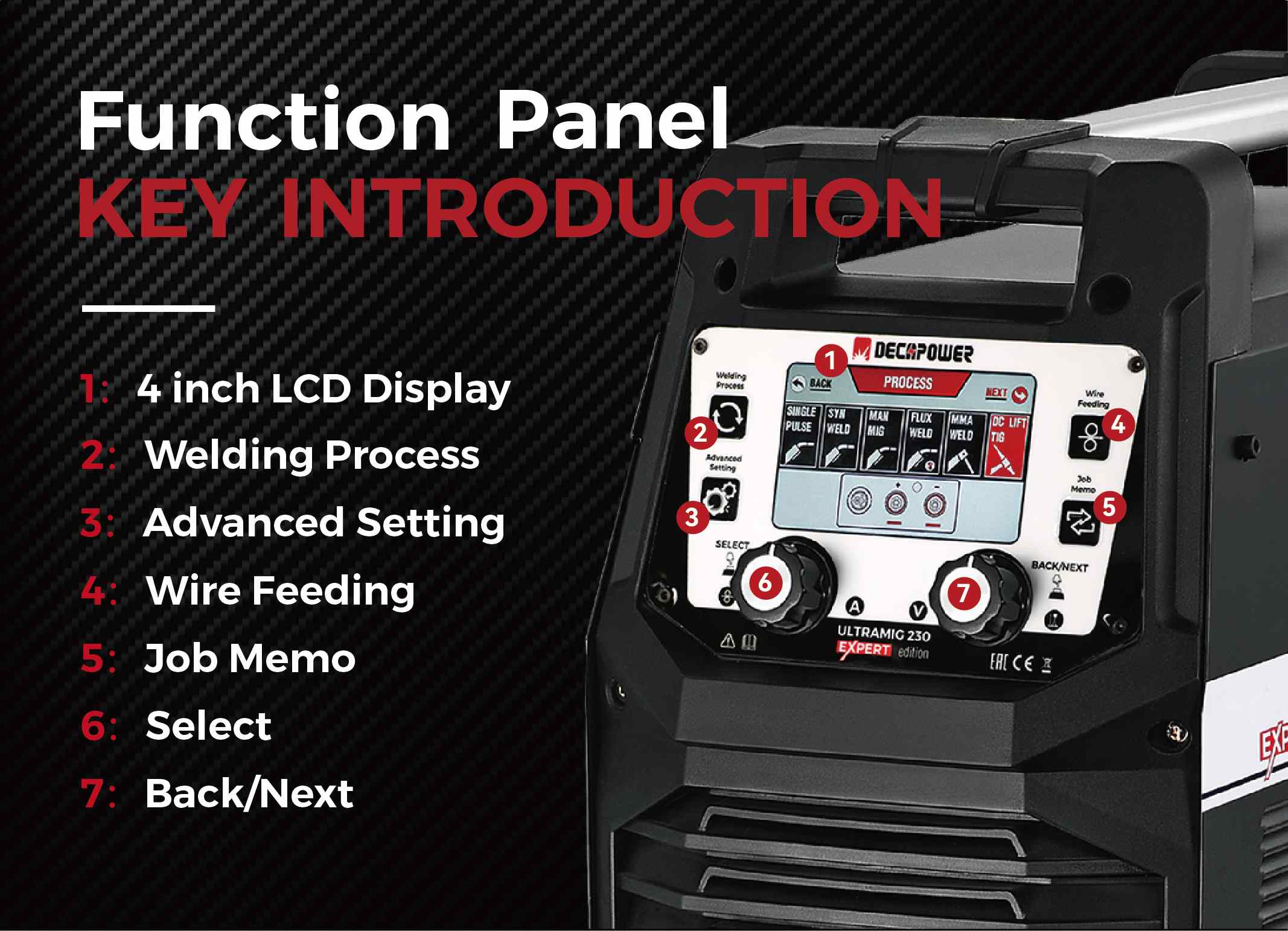
- Visual Logic: A 4-inch LCD screen displays clear icons rather than confusing codes. Both experienced welders and newcomers find it straightforward to set up ideal parameters.
- Hardware Strength: The machine uses 8 high-power IGBTs plus a 4-roller, double-driven wire feeder. Soft aluminum wire moves smoothly, without bird-nesting or slipping issues.
- Memory for Success: A “Job Memo” function offers 10 channels to store and recall custom parameters. Welders can save preferred settings for various aluminum alloys and call them back instantly.
FUSION PMCT-205: The Versatile Multi-Processor
Shops that handle a wide range of tasks benefit from the Fusione PMCT-205. This 6-in-1 unit combines MIG (with Pulse), MMA, HF TIG, and HF Plasma Cutting inside one portable package. It suits field repairs perfectly. A welder can shift from pulse-welding an aluminum fuel tank to plasma-cutting a steel bracket in just minutes.
Real-World Applications: Where Theory Meets the Metal
A machine proves its worth through the actual problems it solves in the workshop. Here are examples of how Double Pulse technology handles demanding situations.
Marine Fabrication and Aluminum Boat Repair
Constructing or fixing aluminum boats means running long seams on 5052 or 6061 alloys. Conventional MIG often produces heavy spatter and soot that ruins the marine-grade surface. With the ULTRAMIG-230 EXPERT in Double Pulse mode, fabricators produce watertight, structurally solid welds. The bead shape needs no grinding afterward. Lower heat input also avoids warping on thin hull plates, which cuts out hours spent on straightening.
Automotive Body Work and Lightweight Components
Current automotive repairs frequently involve thin aluminum heat shields or structural frames. Burn-through remains a serious risk. The digital MCU inside the FUSION PMCT-205 supports “Active Synergy.” This feature automatically adjusts wire speed to match voltage. In Double Pulse mode, the arc holds steady at reduced amperage levels. Strong bonds form reliably on 1mm to 2mm material without damaging the base metal.
Beyond the Machine: Customized Solutions for Unique Challenges
Decapower recognizes that every production setup faces its own obstacles. We go further than selling equipment; we deliver practical answers. Our manufacturing holds ISO9001 certification and stands out in custom distribution and engineering work.
Whether a distributor wants a unique brand look via our OEM services or an industrial customer requires a tailored welding setup for a particular alloy, our R&D team stands prepared. That team has already provided solutions to several of the world’s top 500 companies. Our “Can-Do” approach involves listening closely to your difficulties and working to refine our products accordingly.
Quality You Can Trust
Each machine—from compact portable models to larger industrial pulsed MIG units—passes strict load and welding tests prior to shipment. Our focus remains on technology that performs reliably and stays safe over many years of service across more than 100 countries.
Conclusione
The days of battling aluminum soot and rough beads have passed. Choosing Double Pulse MIG technology with the ULTRAMIG-230 EXPERT or the FUSION PMCT-205 means cleaner welds, greater strength, and better overall efficiency.
Ready to improve your welding results? Take a look at our complete range of digital welding equipment or reach out to our team for a personalized discussion. Thousands of professionals around the world already rely on Decapower to “Make Welding Easy for Everyone!”
[Visit our Online Shop] | [Inquire About Customized OEM Solutions]
Domande frequenti
Q: Why does “soot” or black smut form during aluminum MIG welding?
A: The soot typically consists of magnesium oxide or unoxidized aluminum particles. It appears when the heat runs too high or shielding gas coverage weakens. Double Pulse MIG helps by agitating the weld pool and improving heat management, which leaves the weld much cleaner.
Q: Is Double Pulse MIG really as strong as TIG for structural aluminum?
A: Yes, it is. TIG often sets the benchmark for appearance, yet Double Pulse MIG achieves solid penetration and fusion thanks to those high peak current pulses. It works well for structural tasks in marine and automotive settings.
Q: Can I use standard MIG gas for Double Pulse aluminum welding?
A: Aluminum demands high-purity Argon (Ar ≥ 99.99%). CO2 or steel-oriented mixed gases lead to quick oxidation and weld failure.
Q: Do I need a special wire feeder for aluminum?
A: Aluminum wire feels soft and kinks easily. A 4-roller, double-driven system, such as the one on the ULTRAMIG-230 EXPERT, gives steady feeding and prevents wire damage.