
 Signar













Decapor Informação curada para Profissionais, Hobistas e Educadores.
Fiquem atualizados com as últimas informações sobre novas tecnologias de produtos,inovações e mais da indústria de Sueldagem.







Is Double Pulse MIG Worth It? Advanced Aluminum Welding Guide
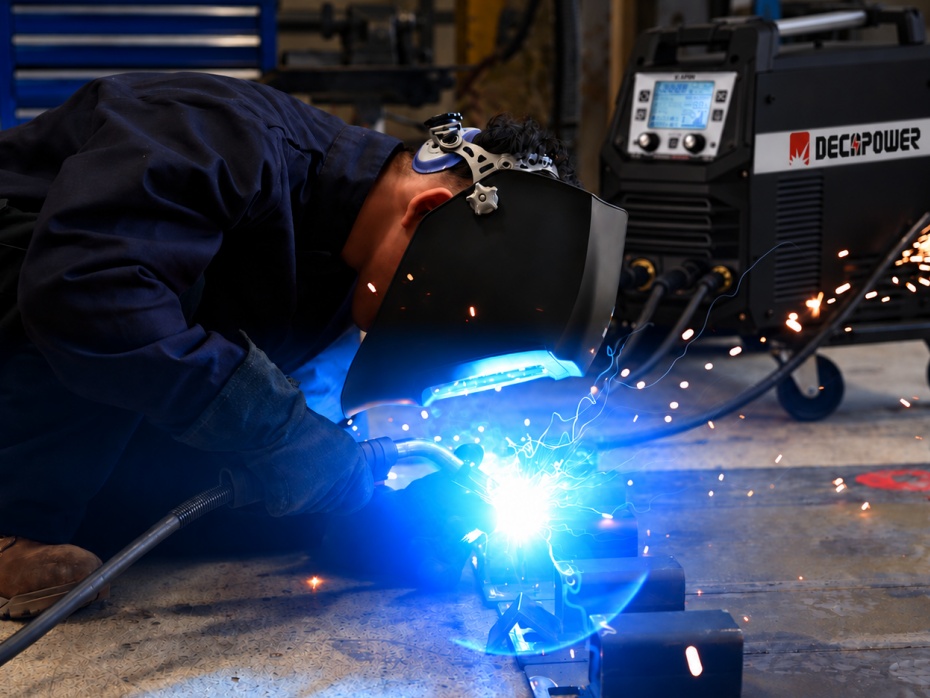
Mastering Aluminum Fabrication: The Evolution of Advanced Pulse MIG Technology
Aluminum welding requires unique thermal and mechanical considerations that require special power management and arc control. Decapower delivers advanced multi-process welding and cutting systems specifically designed to overcome these technical obstacles for fabricators around the world. For manufacturing companies considering investing in double-pulse MIG welding aluminum, knowledge of the technology and its benefits is crucial.
The Pain Points of Aluminum Fabrication
Aluminum can be frustrating for welders because of its high thermal conductivity and fast oxidation rate.
- Thermal Issue: Aluminum is a quick conductor of heat; hence, high heat is needed, which usually results in burn-through on thin gauges.
- Aesthetic Problems: Conventional GMAW is known to produce uneven bead shapes, and hence achieving an aesthetic aluminum weld bead becomes difficult through this process.
- Cleanup after Welding: Spatter is a problem, and it causes a lot of grinding work.
Decapower: Precision Engineering for Global Welders
Decapower specializes in the design and production of multi-process welding and cutting devices for professionals, emphasizing reliability, digital controls, and better arc stability.
- Brand Purpose: To provide problem-solving welding and cutting devices fitted with user-friendly digital control systems.
- Brand Strengths: Combinations of SMAW, GMAW, GTAW, and Plasma Cutting Technologies for Light-Industrial & Professional Use.
- Product Features: Developed from heavy-duty parts and a digital MCU programmed for better arc control.
Decoding Pulse Control: Double Pulse vs Single Pulse MIG
Understanding arc modulation is critical when selecting the best double pulse MIG welder for aluminum fabrication. Comparing double pulse vs single pulse MIG technology helps manufacturers determine whether advanced waveform control justifies the equipment investment.
How Pulse Technology Governs Thermal Input
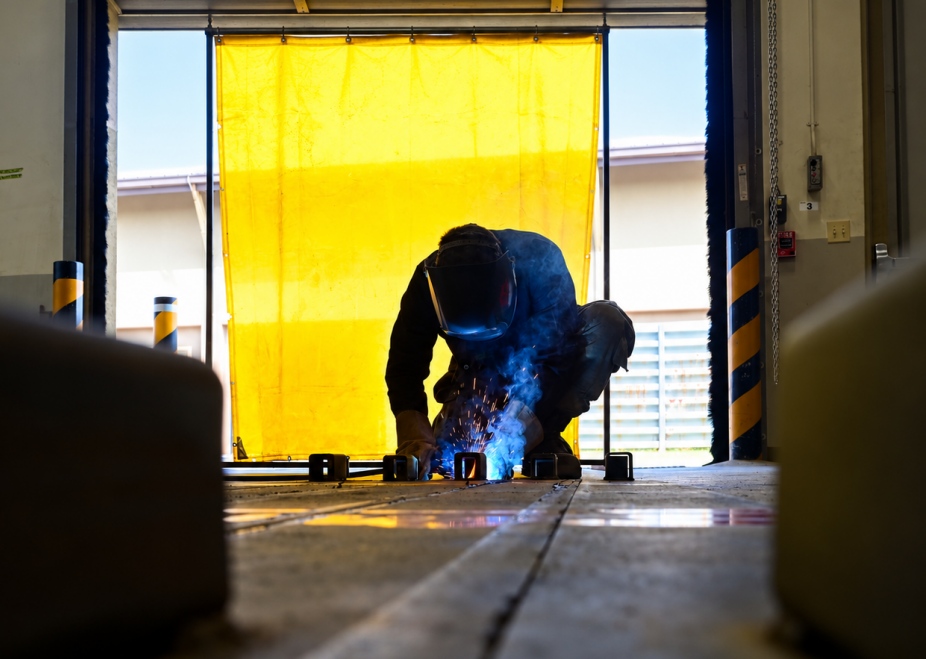
Pulse MIG switches between high peak current for transferring the metal and low background current for cooling the puddle.
- Single Pulse Technology: Switching between peak current for metal transfer and background current for sustaining the arc and avoiding excess heating of the welding zone.
- Double Pulse Technology: Superimposing an additional low-frequency pulse wave on the base pulse stream, which agitates the weld puddle.
- Heat Management: Ensures low heat input into the workpiece, leading to minimal workpiece distortion and no burn-through of thin aluminum sheet metal.
Aesthetic Perfection and Structural Integrity
Double pulse MIG welding aluminum is able to offer cosmetic and structural advantages equal to AC GTAW methods but at substantially greater travel speeds.
- Stack-of-Dimes Effect: The cyclic current of the second pulse produces uniform, cyclical ripple effects similar to those produced by TIG welding.
- MIG Welding Aluminum Spatter Reduction: The spray transfer effect at the highest peak pulses prevents spatter from the weld.
- Penetration Control: Guarantees proper penetration at the weld toe but leaves the weld pool boundary cool.
Practical Applications Across Specialized Industries
Double pulse MIG welding technology proves advantageous in various applications where speed, aesthetics, and strength are essential requirements.
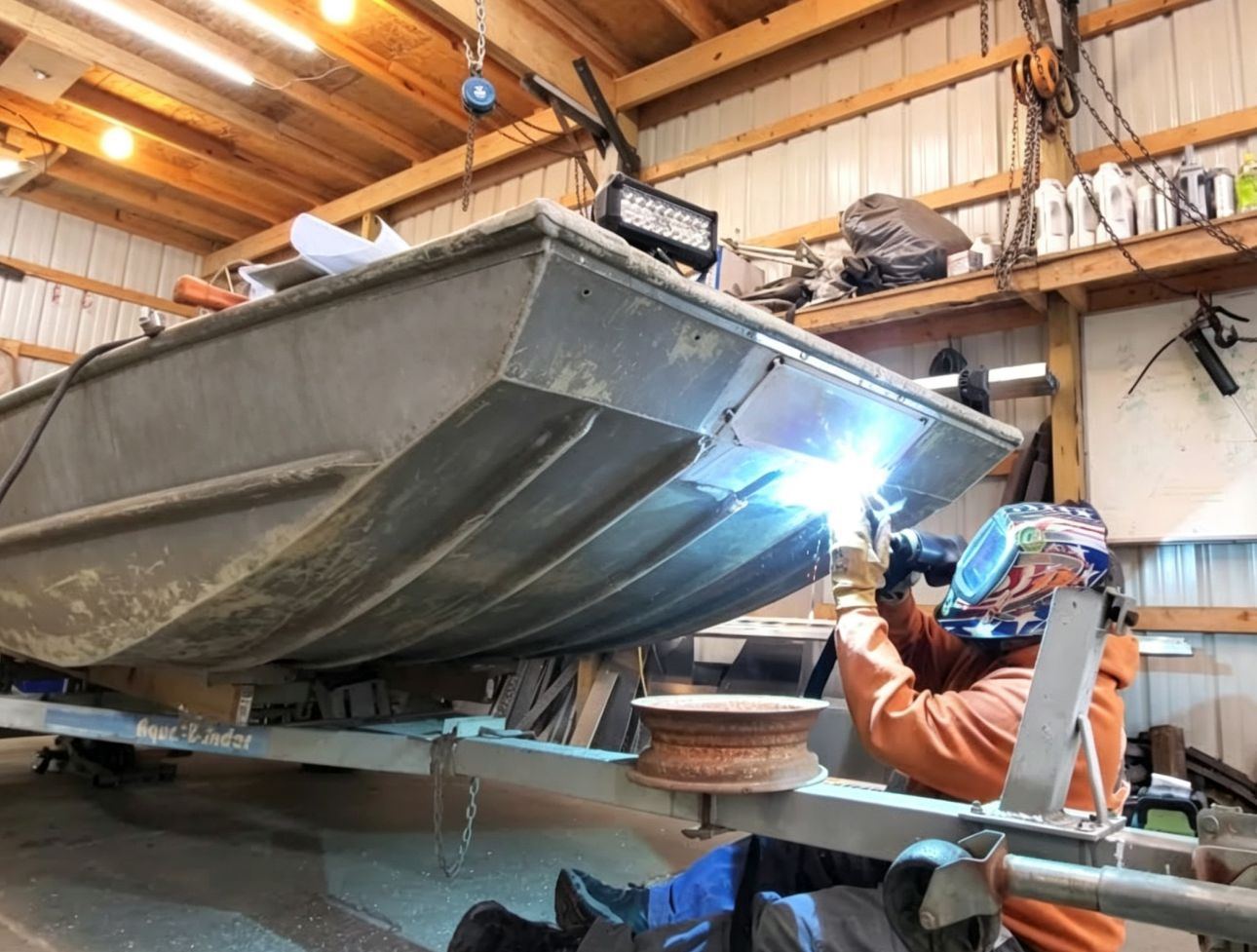
Marine Fabrication and Aluminum Boat Building
Welding of the aluminum hulls and marine superstructures demands high structural integrity and leak-proofness under conditions of constant tension.
- Problem Solved: No need for preheating and no hot cracking in alloyed hull sheets.
- Feature Advantage: Double-pulse MIG welder with synergic settings allows tuning of arc length and speed of wire feeding at once.
- Benefit Achieved: Increases welding speed and provides leak-proof joints resistant to corrosion.
Automotive Repair and Thin Sheet Fabrication
In today’s automotive repairs, joining thin aluminum panels without warping or burning holes in them is necessary.
- Problem Solved: Prevents heat distortion of thin panels and decreases post-weld panel beating.
- Feature Advantage: Double pulse MIG for thin aluminum has precise heat control and maintains a very small heat-affected zone.
- Benefit Realized: Maintains OEM structure with minimum cosmetic refinishing needed.
Product Spotlight: ULTRAMIG-230 EXPERT Double Pulse MIG Welder
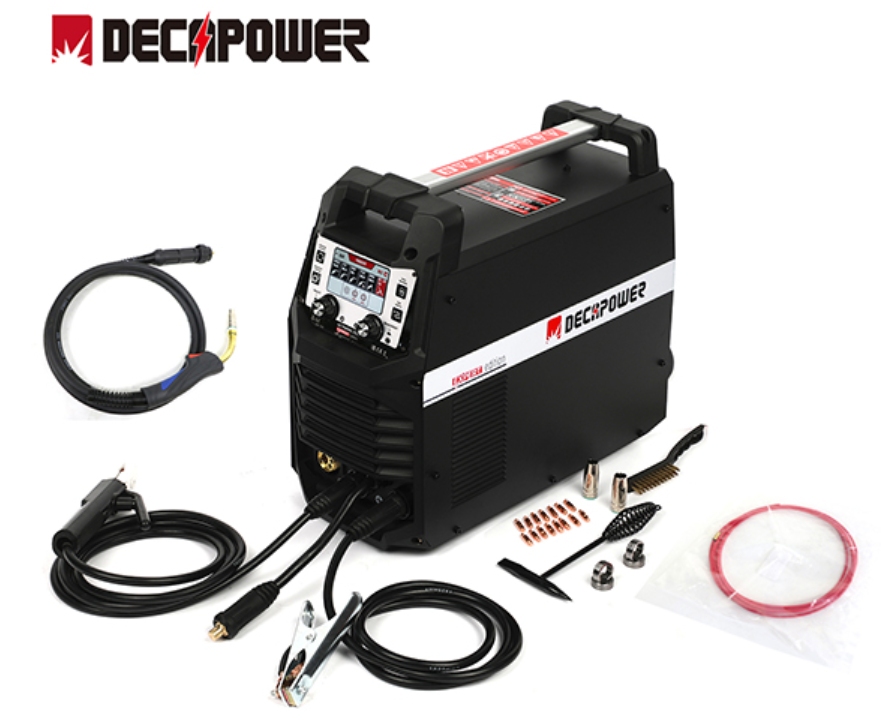
O EXPERTE ULTRAMIG-230 double pulse MIG welder combines powerful hardware architecture with simplified digital synergy, providing an effective solution for professional aluminum fabrication.
Industrial-Grade Hardware Meets Synergic Intelligence
With reliable design, ULTRAMIG-230 EXPERT offers accurate wire feeding and pulse timing, making it a universal MIG welder for aluminum welding.
- Pure Digital MCU Control: It is equipped with full-bridge inverter technology using 8 high-power IGBTs for better arc stability.
- 4 Roller Double-Driven Wire Feeder: It ensures smooth feeding of aluminum wire without birdnesting or slippage.
- Visual LCD Interface: 4-inch color LCD provides a visual interface with graphic icons for easy settings.
- Customized Job Memo: Up to 10 customized parameter channels can be saved based on the welding habits of users.
Technical Parameters of the ULTRAMIG-230 EXPERT
Below are the key technical specifications for the Decapower ULTRAMIG-230 EXPERT:
| Parameter | Especificação |
| Tensão de alimentação de entrada | AC 230V ± 10%, 50/60 Hz |
| Processos de soldagem | MIG / Pulse MIG / Double Pulse MIG / MMA / Lift TIG |
| Sistema de Controlo | Pure Digital Control & Full-Bridge IGBT Circuit |
| Display Type | 4-inch High-Definition Color LCD |
| Mecanismo de alimentação de arame | 4-Roller, Double-Driven Feed System |
| Customized Channels | 10 Channel Job Memo (Save/Load) |
| Compatible Materials | Aluminum Alloys, Stainless Steel, Carbon Steel |
Cost-Value Analysis and Return on Investment
Evaluating double pulse vs single pulse MIG requires analyzing productivity gains against initial equipment costs. Understanding double pulse MIG welding ROI helps fabrication businesses determine whether improved weld quality and reduced finishing expenses justify the purchase.
Calculating the Long-Term ROI of Sub-$500 Pulse Technology
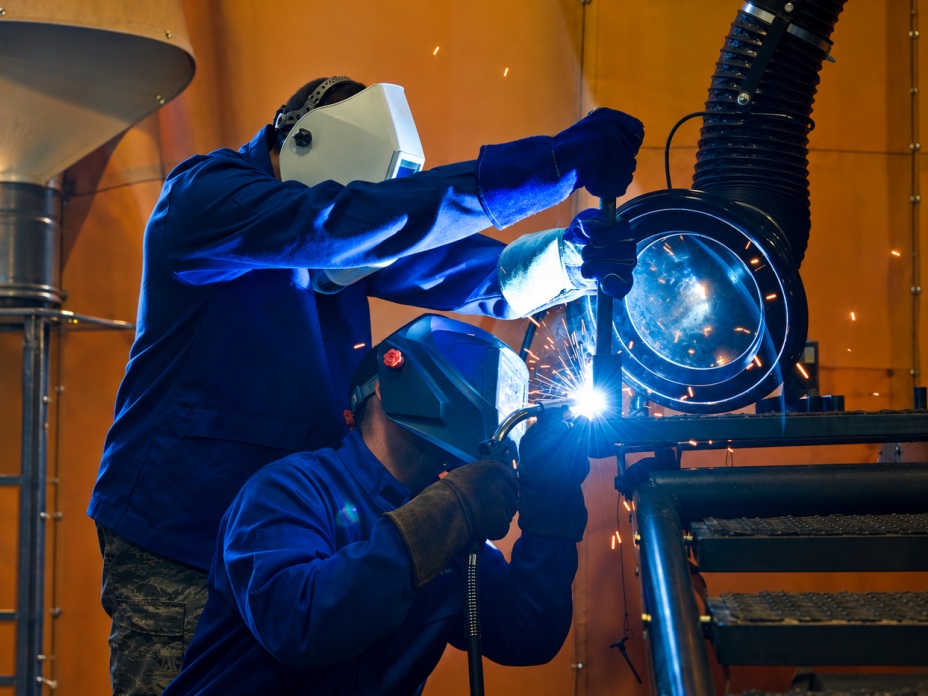
When asking, “Is double pulse MIG worth it?”, fabricators must consider total labor savings, production speed, and finishing costs.
- Reduced Finishing Labor: Low spatter and superior bead aesthetics reduce grinding time and post-weld cleanup.
- Higher Travel Speed: Achieves TIG-like cosmetic quality at up to five times the speed of traditional GTAW.
- Accessible Capital Cost: Decapower brings double pulse MIG welder cost down under $500, making professional pulse capability accessible to small shops.
Tailored Support and Customized Engineering Solutions
Commercial Partners can benefit from Decapower with the help of technical solutions and worldwide services.
- Customized Manufacturing for Private Label: This is in terms of customized colors, customized brand names, and customized hardware configurations.
- Customized Parameters for the Arc: Software firmware customization to support unique types of aluminum wire and their industrial applications.
- Technical Services: Application engineer assistance in troubleshooting, machine setup, and parameter tuning.
Collaboration with Decapower: Adaptable Business Solutions
If you are looking to ramp up your production or improve your workshop setup, Decapower provides custom value:
- For Marine & Industrial Fabricators: Replace your existing welding system with powerful 4-roller synergistic double-pulse MIG welders for faster deposition and reduced post-weld cleaning.
- For Auto Repair & Customizers: Weld aluminum with bead-like precision with controlled heat application on thin metal sheets.
- For OEM Customers & Distributors: Add value by increasing your product offerings through customized welding solutions.
FAQ
Q: Why choose double pulse MIG over the conventional MIG aluminum welding process?
A: Double pulse MIG regulates heat by applying two electrical currents in sequence, which helps prevent burning through thin aluminum plates while producing an almost zero-spatter, TIG-like weld bead pattern.
Q: Is a double pulse MIG welder capable of working with materials other than aluminum?
A: Yes, a double pulse MIG welder can handle stainless steel and carbon steel metals with ease, giving excellent results in terms of controlled heat input, minimum workpiece distortion, and high-quality weld beads even in thin alloy metals.
Q: Should one use a spool gun for double pulse aluminum MIG welding?
A: Although one may use a spool gun, one can successfully weld using soft aluminum wires through standard welders with the help of a 4-roller double-driven wire feeder along with a Teflon liner.
Q: How does synergic control benefit a double-pulse MIG welder setup?
A: Synergic control allows for automatic adjustment of voltage and pulse frequency depending on the selection of wire material, wire size, and feed speed chosen by the user.
Q: What are the advantages of a portable welder?
A: Portable welders offer high mobility and flexibility, allowing operators to perform precise welding operations anytime and anywhere, making them ideal for field repairs, small-batch production, and on-site tasks.