
 Anmelden


Decapower Kuratierte Informationen für Profis, Hobbyisten & Pädagogen.
Bleiben Sie auf dem Laufenden mit den neuesten Informationen zu neuen Produkttechnologien, Innovationen und mehr aus der Schweißmaschinenindustrie.







Warum sich Ihr Edelstahl-MIG-Draht immer wieder verheddert: Geheimnisse der Kontaktspitzen für Kohlenstoffstahl im Vergleich zu Edelstahl
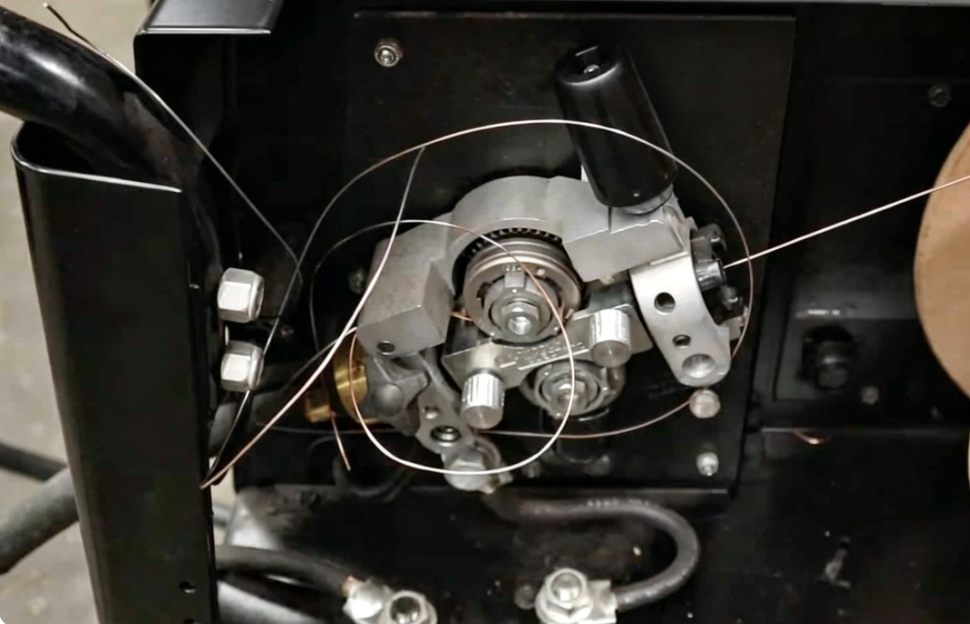
Sie befinden sich mitten in einem kritischen Fertigungsprojekt und arbeiten an einem reibungslosen Übergang von Kohlenstoffstahl zu Edelstahl. Plötzlich flackert der Lichtbogen, der Drahtvorschub stoppt, und Sie öffnen die Antriebswalzentür und finden ein chaotisches Durcheinander verhedderter Drähte vor – das gefürchtete „Drahtverheddern“.
Bei DecapowerAls führender Hersteller von fortschrittlichen Mehrprozess-Schneidanlagen für SMAW, GMAW, GTAW und Plasmaschneidtechnik wissen wir, dass versteckte Probleme beim Drahtvorschub Werkstätten massive Ausfallzeiten verursachen. Viele Anwender vermuten die Ursache im Spannsystem oder der Drahtqualität, doch meist liegt sie in einer Fehlpaarung zwischen Drahtmaterial und Kontaktdüsengröße. Das Verständnis des Hitzeverhaltens verschiedener Legierungen im Brenner ist der Schlüssel zu einem einwandfreien, unterbrechungsfreien Lichtbogen.
Die Wissenschaft hinter dem Marmeladenphänomen: Geheimnisse der Wärmeausdehnung
Um wiederkehrende Drahtvorschubstörungen zu vermeiden, müssen die Bediener die spezifischen physikalischen Eigenschaften der Metalle verstehen, die sie durch den Brenner führen.
Verhalten von Kohlenstoffstahl im Vergleich zu Edelstahl
Beim Wechsel des Drahttyps hat man es mit völlig anderen thermischen Dynamiken zu tun, die die physikalischen Abmessungen unter Hitzeeinwirkung verändern.
- Höherer Ausdehnungskoeffizient: Edelstahldraht dehnt sich bei Einwirkung der Strahlungswärme des Schweißlichtbogens deutlich stärker aus als Kohlenstoffstahl.
- Langsamere Wärmeableitung: Edelstahl speichert die Wärme aufgrund seiner geringeren Wärmeleitfähigkeit länger, was die strukturelle Ausdehnung im Inneren der Waffe noch verstärkt.
- Erhöhte Oberflächenreibung: Durch die physikalische Ausdehnung des Drahtes entstehen sofortige Reibungskräfte an den Innenwänden einer Standard-Kontaktspitze.
Warum Standard-Kontaktspitzen bei Edelstahldrähten versagen
Standard-Kontaktspitzen werden mit engen Toleranzen gefertigt, die speziell für Kohlenstoffstahldrähte ausgelegt sind, wodurch eine unmittelbare Gefahr für Edelstahllegierungen entsteht.
- Einschränkungen des Bohrungsdurchmessers: Eine Standard-Kontaktspitze mit 0,035 Zoll (0,9 mm) besitzt eine Innenbohrung, die für die minimale Wärmeausdehnung von Kohlenstoffstahl optimiert ist.
- Der Drosseleffekt: Da Edelstahldraht durch Strahlungswärme aufquillt, wird die Bohrung zu einer mechanischen Drosselstelle, die den Draht vollständig stoppt.
- Das Ergebnis des „Vogelnest-Effekts“: Wenn sich der Draht an der Spitze verhakt, die Antriebswalzen aber weiterdrücken, knickt der Draht am Antriebsgehäuse ein, was zu einer sofortigen Abschaltung führt.
Die richtige Auswahl und Dimensionierung Ihrer Verbrauchsmaterialien
Um diesen Engpass zu überwinden, müssen Sie Ihre Auswahl der Verbrauchsmaterialien und Ihre Systemkonfiguration an die Materialeigenschaften anpassen.
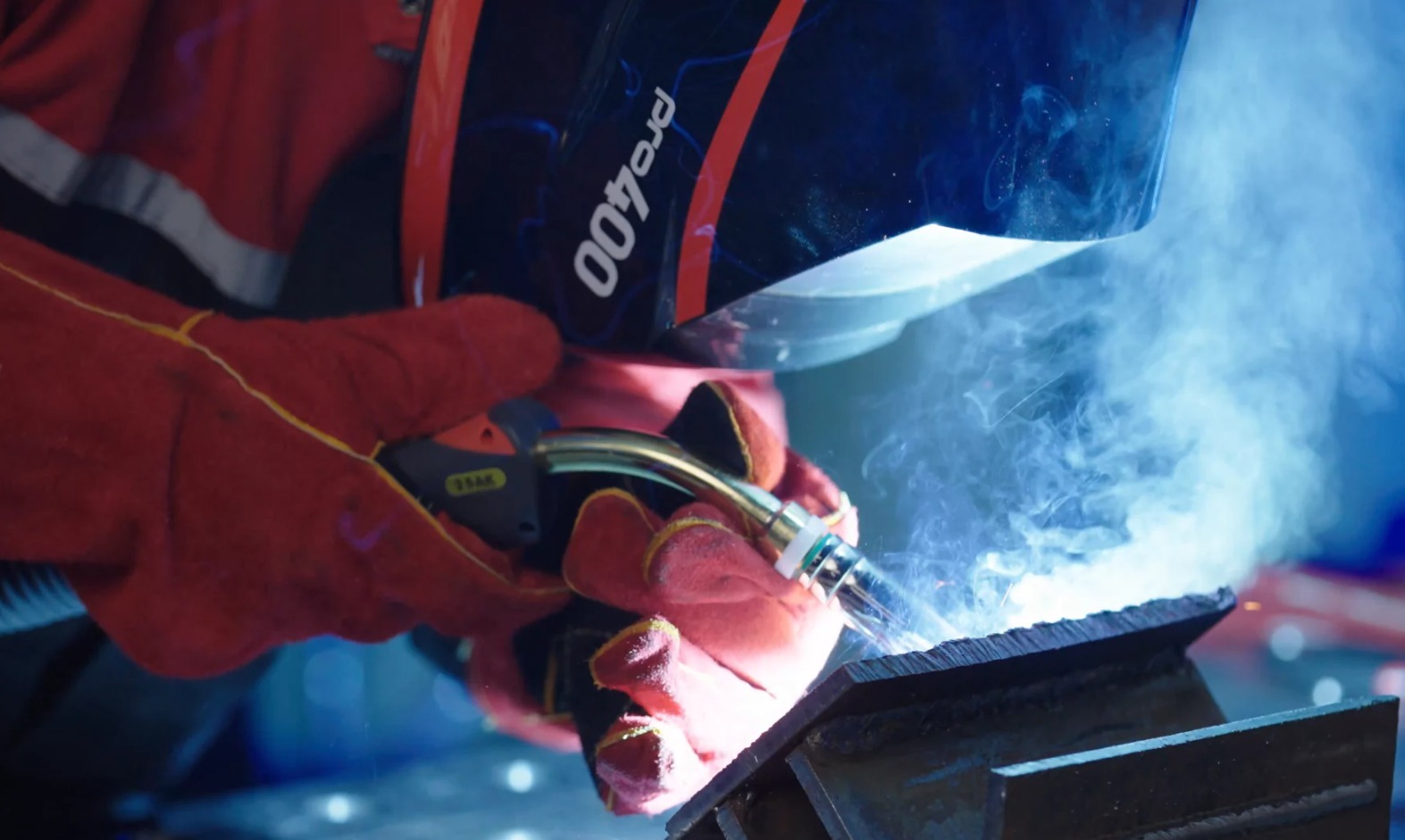
Übergröße und Materialabstimmung
Durch eine leichte Anpassung der Abmessungen Ihrer Verbrauchsmaterialien wird sichergestellt, dass sich der sich ausdehnende Draht auch unter hoher thermischer Belastung frei bewegen kann.
- Verwenden Sie überdimensionierte Spitzen: Verwenden Sie immer Kontaktspitzen, die speziell für Edelstahl gekennzeichnet sind (oft mit „SS“ gekennzeichnet oder leicht überdimensioniert gefertigt, z. B. mit einer 0,040-Zoll-Bohrung für einen 0,035-Zoll-Edelstahldraht).
- Langlebiger Schweißbrenner: Hitzebeständige Kontaktspitzen sorgen für einen stabilen Stromfluss, reduzieren das Verformungsrisiko und verbessern die Schweißkonsistenz bei Hochtemperaturanwendungen mit Edelstahl.
- Mehr Freiraum: Durch die Möglichkeit, dass sich der Draht ausdehnen kann, wird ein zuverlässiger elektrischer Kontakt ohne mechanische Einschränkung gewährleistet.
Auswahl von Antriebsrollen und Auskleidung
Um einen reibungslosen Zufuhrweg zu erreichen, muss die Justierung der Kontaktspitze mit den richtigen vorgelagerten Komponenten kombiniert werden.
- Richtige Antriebsrollennuten: Achten Sie darauf, dass Sie das richtige Rollenprofil für Ihren Drahttyp verwenden. Standard-V-Nutrollen eignen sich ideal für massive, harte Drähte wie Kohlenstoffstahl und Edelstahl, während K-Nutrollen (gerändelt) für Fülldraht und U-Nutrollen für weiche Aluminiumdrähte vorgesehen sind.
- Nichtmetallische Auskleidungen: Ersetzen Sie die Stahlspulenauskleidungen durch Teflon-, Nylon- oder Teflon-Kohlenstoff-Auskleidungen, um die Reibungskoeffizienten drastisch zu minimieren, bevor der Draht auf die Spitze trifft.
- Optimierte Führungsrohre: Stellen Sie sicher, dass die internen Ein- und Auslassführungen korrekt ausgerichtet sind, um ein Abknicken des Drahtes vor dem Eintritt in die Pistolenführung zu verhindern.
Wie Decapower die MIG-Drahtzuführung und die Leistungsstabilität neu definiert
Decapower entwickelt robuste Industriesysteme, die aktiv gegen Drahtzuführungsfehler und schwankende Feldbedingungen vorgehen.
Ultimative Drahtfütterungshardware gegen Vogelnester
Unsere Digitalmaschinen sind so konstruiert, dass sie auch unter strengen Werkstattbedingungen problemlos anspruchsvolle Legierungsdrähte verarbeiten können.
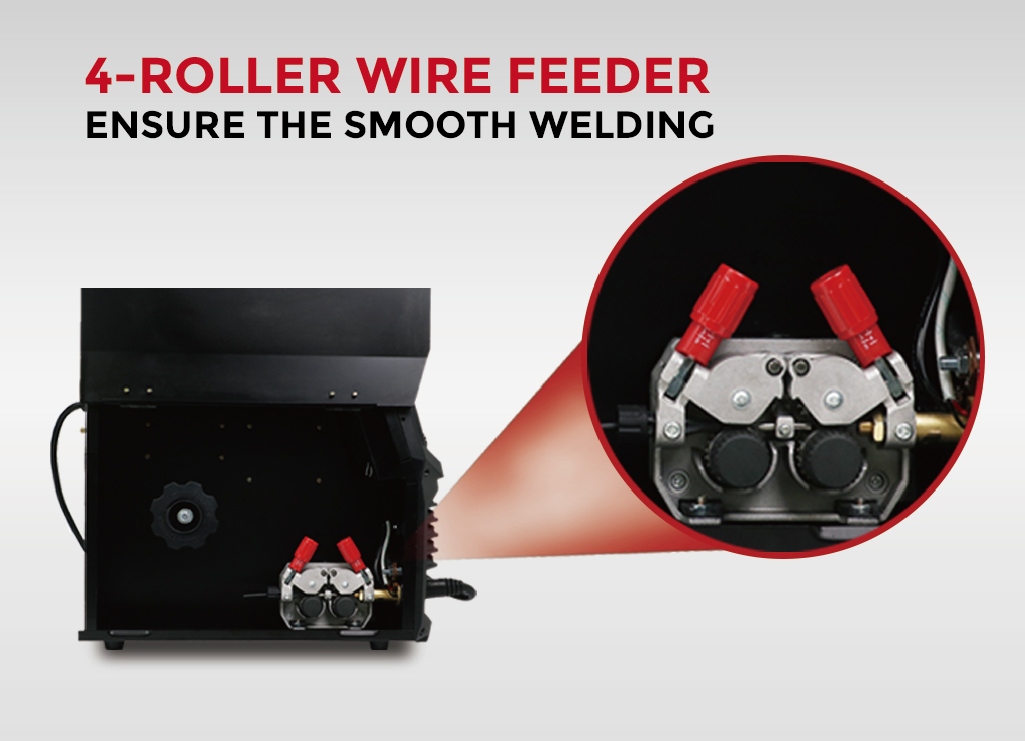
- Vierwalzen-Doppelantriebsmechanismen: Hochleistungseinheiten wie die Decapower ULTRAMIG 230Verfügt über einen robusten, doppelt angetriebenen 4-Walzen-Drahtvorschub, der einen gleichmäßigen mechanischen Druck erzeugt, ohne weiche oder spröde Drähte zu verformen.
- Hocheffiziente, reibungsarme Drahtvorführung: Dank der reibungslosen internen Führungsanordnung gewährleisten unsere Vorschubsysteme, dass Ihr Edelstahldraht an den Antriebsrollen niemals abknickt oder sich verbiegt, selbst wenn der Spitzenwiderstand steigt.
- Vorprogrammierte Synergic Controls: Der ULTRAMIG 230 gleicht automatisch die Drahtvorschubgeschwindigkeit mit der Lichtbogendynamik aus und reduziert so die thermische Rückkopplung, die über die Pistole zur Kontaktspitze geleitet wird.
Automatische Stromkompensation für Fernverbindungen
Für die Fertigung schwerer Industrieanlagen und abgelegene Baustellen bieten unsere hochentwickelten Modelle eine unübertroffene Lichtbogenstabilität.
- Schutz vor Eingangsspannungsabfall: Hochleistungsmodelle wie die Decapower XTRAMIG 200Ausgestattet mit der automatischen Stromkompensationstechnologie, die den Lichtbogen auch bei Verwendung extrem langer Stromzuführungsverlängerungen stabil hält.
- Maßnahmen gegen Spannungsabfall: Wenn Sie für Ihre Arbeit lange Schweißbrennerkabel benötigen, stabilisiert diese Funktion automatisch den Ausgangsstrom, um Spannungsabfälle am Lichtbogen zu vermeiden.
- Gleichbleibende Lichtbogenleistung: Durch die Aufrechterhaltung eines konstanten Spannungsprofils schmilzt der Draht gleichmäßig, wodurch Strahlungswärmespitzen minimiert werden, die zu Drahtaufweitung und Verstopfungen der Düse führen können.
Maßgeschneiderte Lösungen und globale Compliance-Zertifizierung
Uns ist bewusst, dass jeder industrielle Betrieb maßgeschneiderte Ausrüstung benötigt, die strengen internationalen regulatorischen Rahmenbedingungen entspricht.
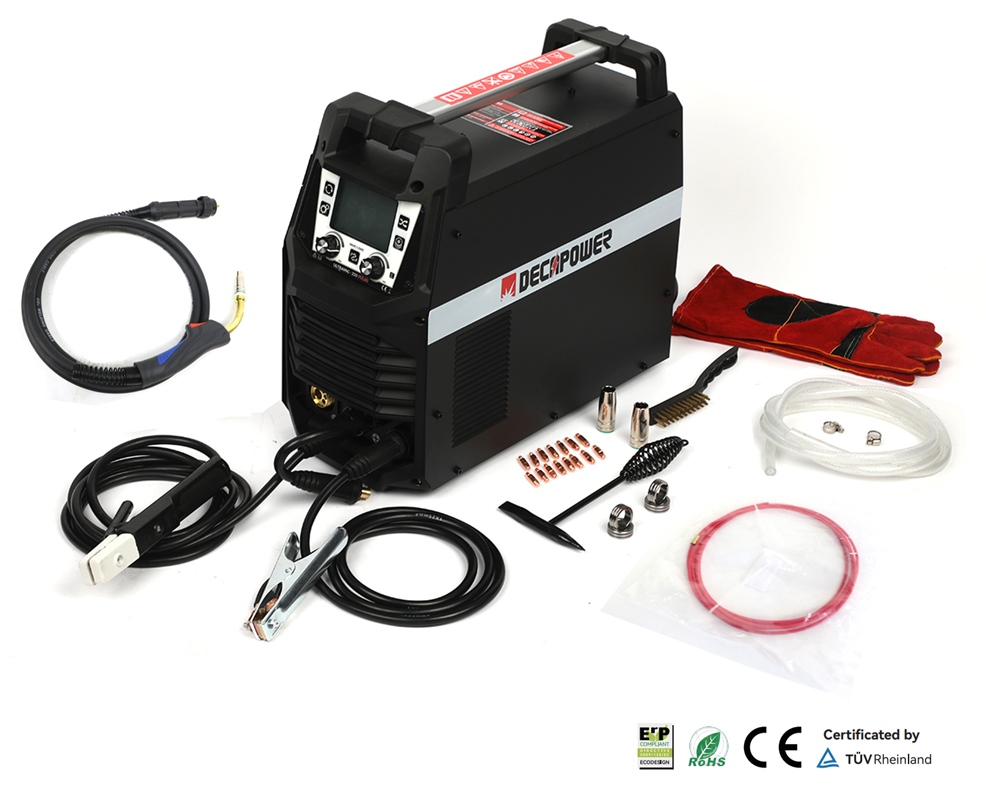
- Maßgeschneiderte Entwicklung: Wir bieten vollständig individualisierte Konfigurationen an, von kundenspezifischen Bedienfeldlayouts bis hin zu kundenspezifischen internen Softwareparametern, die für bestimmte Fertigungslinien entwickelt wurden.
- Kompromisslose Sicherheitsstandards: Jede von uns angebotene High-End-Maschine ist als CE-zertifizierte Schweißmaschine konzipiert und bietet somit volle Sicherheit für Anwendungen, die ein CE-zugelassenes Schweißgerät für Europa erfordern.
- Vollständige Laborprüfung: Unsere Hardware zeichnet sich als Premium-Schweißmaschine aus, die den EU-Standards entspricht und über eine vollständige Validierung als LVD/EMV-zertifizierte Schweißmaschine verfügt.
- Strenge Feldtauglichkeit: Egal ob Sie ein Lichtbogenschweißgerät mit CE-Kennzeichnung oder ein CE-konformes Mehrprozess-MMA/MIG/TIG-Schweißgerät einsetzen, Decapower garantiert zuverlässige Leistung in jedem regulatorischen Markt.
Bereit, Ihre Produktionslinie zu optimieren?
- Für Industriegroßhändler und Einzelhändler: Werden Sie Partner von DecapowerErweitern Sie Ihr Sortiment mit hochzuverlässigen, individuell anpassbaren und weltweit zertifizierten Schweißgeräten, denen Ihre Kunden vertrauen können. Kontaktieren Sie unser Team noch heute für ein Angebot für größere Mengen.
- Für professionelle Fertigungsbetriebe und Werkstätten: Vermeiden Sie kostspielige Ausfallzeiten, Verschachtelungen von Lichtbögen und Lichtbogeninstabilität, indem Sie Ihre Anlage mit unseren Flaggschiffsystemen ULTRAMIG 230 oder XTRAMIG 200 aufrüsten.
Durch die Kombination eines tiefen Verständnisses der Physik von Verbrauchsmaterialien mit der fortschrittlichen Drahtvorschubhardware und der automatischen Stromkompensationstechnologie von Decapower können moderne Werkstätten kostspielige Unterbrechungen durch Drahtverwicklungen vollständig eliminieren und eine makellose Schweißpräzision an jeder einzelnen Verbindung gewährleisten.
FAQ (häufig gestellte Fragen)
F: Warum benötigt man für Edelstahldraht eine andere Kontaktspitzengröße als für Kohlenstoffstahldraht?
A: Edelstahl dehnt sich unter Hitzeeinwirkung deutlich stärker aus und leitet Wärme langsamer ab als Kohlenstoffstahl. Eine Kontaktspitze in Standardgröße würde den sich ausdehnenden Edelstahldraht abschnüren, was zu sofortigen Zuführungsstörungen und Drahtverwicklungen führen würde.
F: Kann ich Standard-V-Nut-Antriebsrollen zum Vorschub von MIG-Edelstahldraht verwenden?
A: Ja. Standard-V-Nutrollen sind speziell für massive Hartdrähte, einschließlich Kohlenstoffstahl und Edelstahl, ausgelegt. Die meisten Decapower-Drahtvorschubgeräte verwenden V-Nutrollen für diese Massivdrähte. Um ein Verheddern der Edelstahldrähte zu verhindern, sollte der Fokus primär auf dem korrekten Abstand der Kontaktspitzen und der Auswahl einer nichtmetallischen Auskleidung liegen, anstatt das Rollenprofil zu ändern.
F: Kann ich den ULTRAMIG 230 im Freien bei windigen Bedingungen für Zaunreparaturen verwenden?
A: Ja, aber Sie müssen von gasgeschütztem MIG-Schweißen auf Fülldraht (gaslos) umsteigen. Wind verweht die Schutzgase herkömmlicher Schweißnähte, was zu Poren und schwachen Schweißnähten führt. Fülldraht hingegen erzeugt seinen eigenen Schutz und ist daher ideal für Reparaturen an Außenzäunen.
F: Wie hilft die automatische Stromkompensation beim Schweißen auf großen Baustellen im Stahlbau?
A: Bei langen Netzkabeln oder verlängerten Schweißleitungen treten naturgemäß Spannungsabfälle auf. Diese Technologie erkennt diese Abfälle automatisch und kompensiert sie intern, sodass Ihr Schweißlichtbogen ohne manuelle Anpassungen perfekt stabil bleibt.