
 Se connecter
Decapower Information organisée pour les professionnels, les amateurs et les éducateurs.
Restez à jour avec les dernières informations sur la technologie des nouveaux produits, les innovations et plus encore de l'industrie des machines de soudage.


MMA vs GMAW Quel processus de soudage est le bon pour votre travail
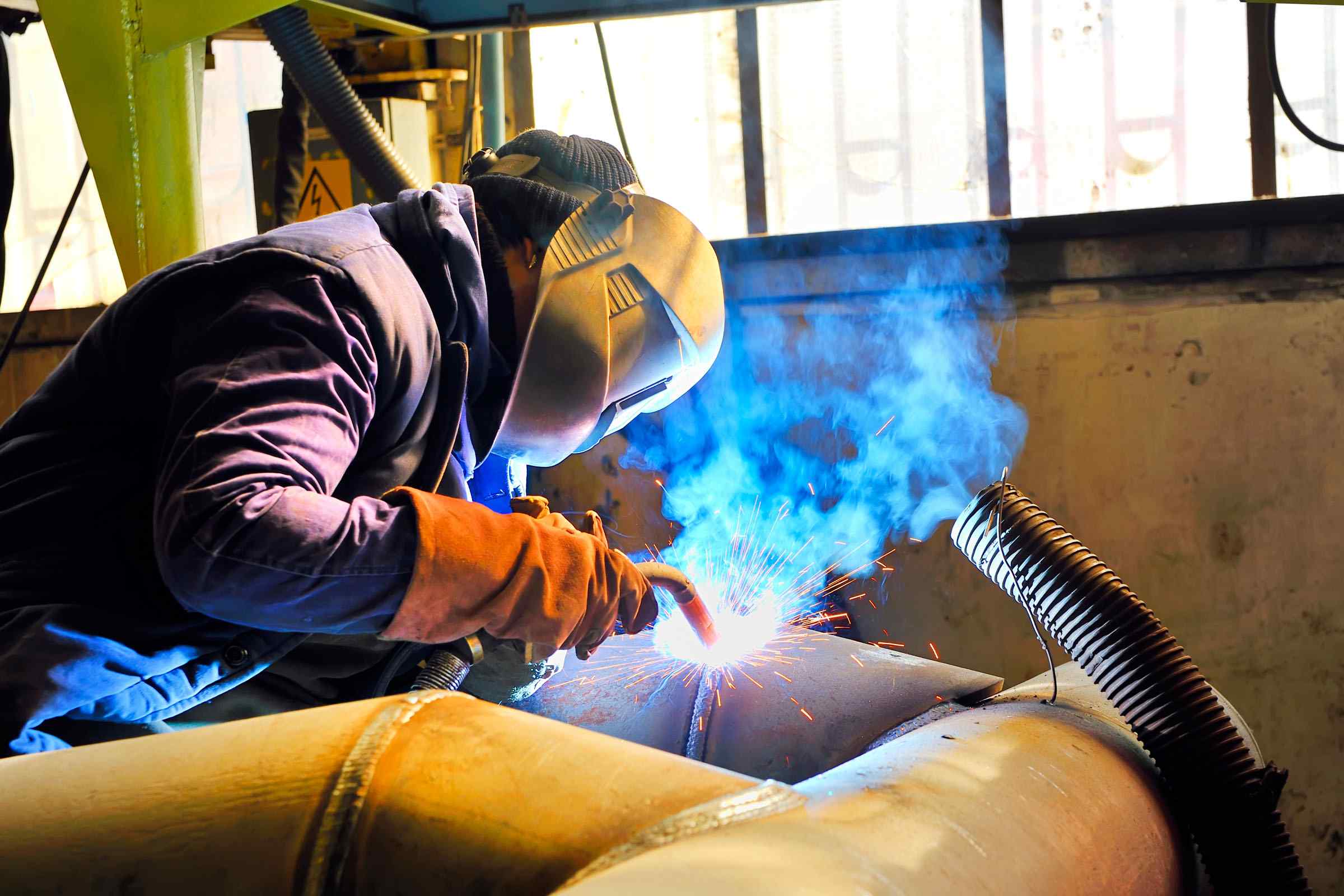
Dans les ateliers de fabrication de métaux, choisir la bonne méthode de soudage peut faire ou casser votre travail. Un bon joint tient fort pendant des années. Une mauvaise conduit à des corrections coûteuses ou des problèmes de sécurité. Que vous gériez une installation industrielle occupée ou que vous travailliiez simplement sur des projets dans votre garage, connaître les vraies différences entre MMA (Arc métallique manuel) et GMAW (Soudage à arc métallique au gaz) est très important.
À DécapouerNous construisons des machines de soudage numériques qui visent à simplifier le travail et à stimuler les résultats. Avec plus de dix ans sur le terrain et des équipements envoyés dans plus de 100 pays, nous nous concentrons sur des équipements fiables qui mettent la sécurité et les performances solides au premier plan. Notre R& D groupe et les ingénieurs écoutent attentivement ce que les clients ont besoin. Ensuite, ils ajustent les designs pour fournir une valeur réelle pour chaque situation.
Comprendre le soudage à arc métallique manuel (MMA)
La mécanique du soudage à bâton
Les gens se réfèrent généralement au soudage MMA comme SMAW ou simplement soudage à bâton. Vous créez un arc entre une tige revêtue de flux et la pièce. Cette chaleur d'arc fondt le noyau de l'électrode et la surface du métal de base, formant un bassin de liquide. Pendant ce temps, le revêtement se romp. Il libère du gaz de couverture et dépose de la scorie sur la perle, bloquant la contamination atmosphérique.
Avantages et limitations du MMA
Le soudage à bâton gagne des points pour être simple et flexible. Vous pouvez transporter l'équipement presque partout. Il fonctionne bien dans différentes positions - plate, verticale, même au-dessus. Comme aucune bouteille à gaz n'est nécessaire, le vent ne’ t cause beaucoup de problèmes. Cela en fait un favori pour les réparations extérieures ou les sites avec des courants d'eau. Il manipule l'acier au carbone, l'acier inoxydable et de nombreux alliages à base de fer sans grand problème.
Au détriment, le rythme est plus lent. Les soudeurs s'arrêtent souvent pour changer de tiges alors qu'ils brûlent. Après chaque passage, vous coupez généralement et brossez la scorie. La tôle mince peut être délicate parce que la brûlure se produit facilement. Les métaux comme l'aluminium ou le cuivre ne’ t souder aussi bien avec cette méthode.
Exploration du GMAW (soudage à arc à gaz métallique) et du MIG
Comment fonctionne le soudage MIG/MAG
GMAW couvre le soudage MIG et MAG. Une électrode de fil solide s'alimente en continu à partir d'une bobine à travers le pistolet. Dans le même temps, le gaz de blindage s'écoule autour du fil pour protéger la puddle chaude de l'oxygène et d'autres gaz dans l'air. Pour l'aluminium ou le cuivre, les soudeurs choisissent généralement l'argon presque pur. Lors de la jonction de l'acier au carbone ou de l'inoxydable, des mélanges tels que l'argon plus le CO ₂ Travailler mieux.
La puissance des technologies Pulse et Double Pulse
Les machines plus récentes apportent des fonctionnalités d'impulsion et de double impulsion au soudage MIG. En mode impulsion, le courant saute entre un pic élevé qui transfère des gouttelettes de métal et un niveau de fond bas qui laisse refroidir un peu la puddle, ce qui réduit la chaleur entrant dans la pièce et réduit les éclaboussures. La double impulsion va plus loin avec une couche de contrôle supplémentaire. Le résultat est des soudures plus rapides qui semblent propres et restent fortes. Il fonctionne particulièrement bien sur les métaux minces ou plus doux comme les feuilles d'aluminium.
MMA vs GMAW : une comparaison détaillée
Analyse des performances et de l'efficacité
GMAW tire en avant lorsque la vitesse et la sortie constante comptent. Le fil continue de s'alimenter, de sorte que vous pouvez poser de longues perles sans faire de pause. MMA nécessite plus d'arrêts pour les nouvelles électrodes.
Voici un rapide look côte à côte :
| Caractéristique | MMA (Bâton) | GMAW (MIG/MAG) |
| Efficacité | Faible – changements fréquents d’électrode | Alimentation de fil haute – continue |
| Facilité d'utilisation | Besoin de bonnes compétences | Plus facile, surtout avec des modes synergiques |
| Portabilité | Excellent – pas de réservoirs d’essence | Faire – nécessite une bobine de gaz et de fil |
| Nettoyage | Le slag doit être enlevé | Très peu de nettoyage nécessaire |
| Matériaux minces | Difficile – facile à brûler | Bons résultats avec les modes pulsation |
Adaptation des matériaux et environnements d'application
GMAW rejoint assez bien l'acier au carbone, l'acier inoxydable, l'aluminium et les alliages de cuivre. Pourtant, le vent peut pousser le gaz de blindage de côté et provoquer une porosité dans la soudure. Dans ces cas, le soudage à bâton règle toujours. Il gère les surfaces rouillées ou peintes où les processus de gaz luttent. Beaucoup de travaux de réparation sur le terrain adhèrent à MMA pour cette raison.
Decapower : pionnier avec des solutions personnalisées
Notre approche est centrée sur la pensée de l’intérieur à l’extérieur. Nous évitons les machines de taille unique. Au lieu de cela, nous ajustons les paramètres, les circuits et les fonctionnalités pour répondre aux besoins exacts. Si vous exploitez une ligne de production et que vous voulez des paramètres spécifiques, ou si vous avez besoin d'équipements de marque privée via OEM / ODM, notre équipe intervient. Ils gèrent tout, des commandes numériques aux ajustements matériels. Partenarier avec nous signifie que vous adaptez votre équipement à vos défis quotidiens.
Les meilleures recommandations de Decapower pour vos projets
Pour faciliter la décision, voici trois modèles populaires qui montrent notre focus sur l’innovation pratique.
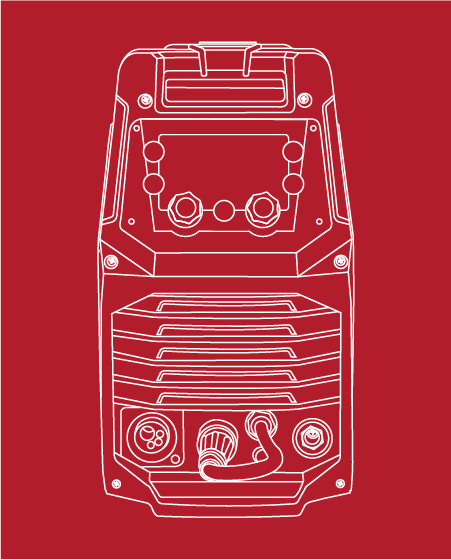
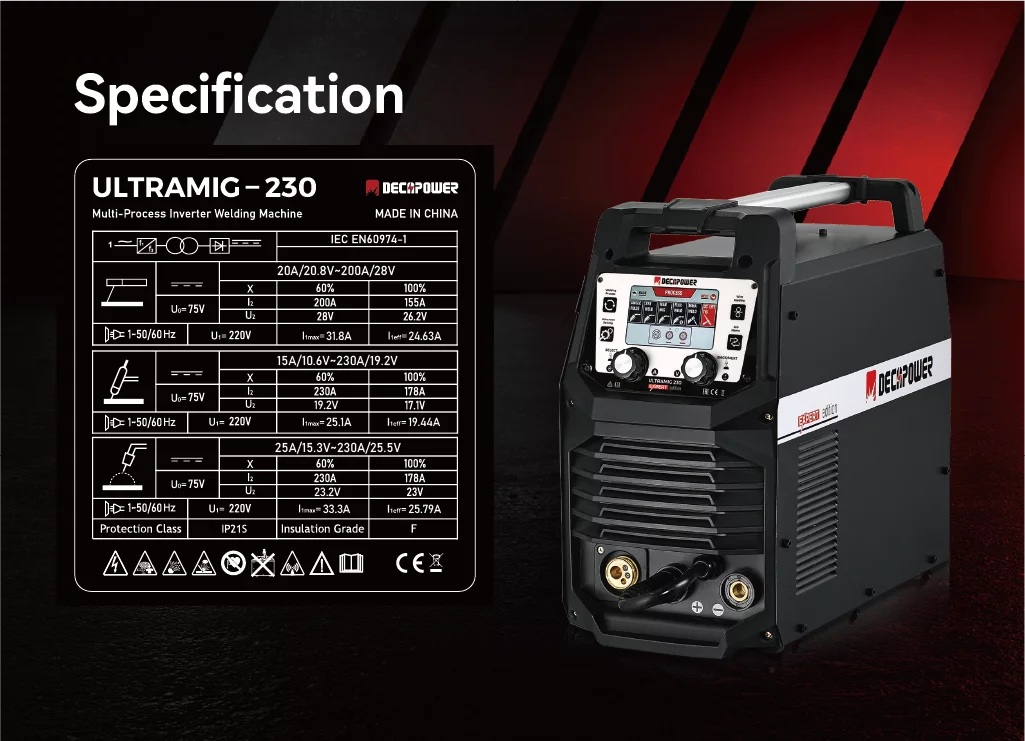
ULTRAMIG-230 EXPERT : la précision du double impulsion
Ceci ULTRAMIG-230 EXPERT machine multi-processus convient à la fois soudeurs expérimentés et les gens qui viennent de commencer.
- Le contrôle numérique complet provient d'un circuit full-bridge et d'un MCU pour des arcs stables.
- L'écran LCD de 4 pouces utilise des icônes claires afin que presque tout le monde puisse l'utiliser rapidement.
- Le mode double impulsion brille sur les travaux en aluminium. Il maintient les éclaboussures faibles et coupe la distorsion sur les morceaux minces.
- Vous pouvez enregistrer jusqu'à 10 ensembles de paramètres pour un rappel rapide.
XTRAMIG-200 : la polyvalence multiprocessus ultime
XTRAMIG-200une unité compacte couvre GMAW, FCAW, SMAW et GTAW.
- Le mode Synergy actif choisit la bonne vitesse du fil une fois que vous saisissez le matériau et le diamètre.
- Il soude le fil solide, le noyau de flux, l'inoxydable et même le cuivre.
- En mode MMA, il prend des électrodes jusqu'à 5 mm et comprend des réglages de démarrage à chaud, de force d'arc et d'anti-adhésion.
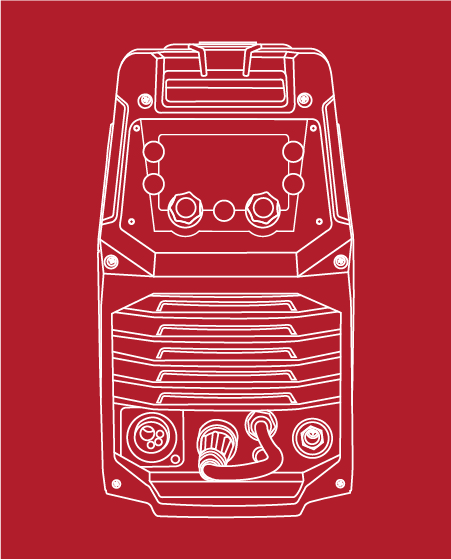
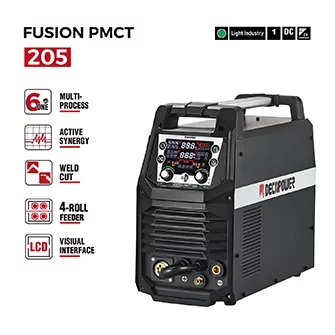
FUSION PMCT-205 : une solution complète 6-en-1
Parfait lorsque vous avez besoin de soudure plus coupe sans commutation d'engrenages.
- Manipule la coupe MIG (synergique et manuelle), MIG à impulsion, MMA, HF TIG et HF plasma.
- Conçu pour se déplacer entre le magasin et le site de travail.
- Le contrôle numérique du MCU offre des résultats propres que vous soyez expérimenté ou nouveau.
Conclusion : Choisir le bon outil pour l’excellence
Votre environnement, les métaux que vous utilisez et la vitesse à laquelle vous devez travailler jouent tous un rôle dans la décision. Pour les fixations extérieures sur des surfaces rugueuses, une machine avec une forte capacité MMA comme la XTRAMIG-200 s'adapte parfaitement. Lorsque vous voulez une production plus rapide ou des soudures en aluminium propres, optez pour quelque chose comme l'ULTRAMIG-230 EXPERT avec son double contrôle d'impulsion. Chez Decapower, nous sommes prêts à fournir des équipements adaptés à vos tâches réelles et qui facilitent la soudure.
FAQ (questions fréquentes)
Q: Comment choisir la bonne machine de soudage pour mon projet?
R: La décision dépend principalement du type de métal que vous utilisez, de l'épaisseur des pièces et de la connaissance que vous avez de la soudure. Nos employés peuvent parler de votre travail et vous orienter vers la machine qui fonctionnera le mieux au jour le jour.
Q: Puis-je obtenir une machine de soudage personnalisée pour mes besoins industriels spécifiques?
R : Oui. Nos ingénieurs travaillent directement avec vous pour assembler une machine qui s'adapte précisément à votre configuration de production.
Q: Quel est le principal avantage d'utiliser un soudeur MIG à double impulsion?
R: Il produit des perles rapides et bien rangées avec presque aucun éclaboussement. L'apport de chaleur reste faible et stable, de sorte que l'aluminium fin reste plat au lieu de se tordre hors forme.
Q: Est-ce que Decapower prend en charge les services OEM pour les distributeurs?
R: Oui, nous le faisons. Les services OEM et ODM complets sont disponibles, vous permettant de placer votre propre marque sur des équipements robustes et spécialement construits.