
 Se connecter
Decapower Information organisée pour les professionnels, les amateurs et les éducateurs.
Restez à jour avec les dernières informations sur la technologie des nouveaux produits, les innovations et plus encore de l'industrie des machines de soudage.






Comment entretenir votre équipement de soudage pour des performances à long terme
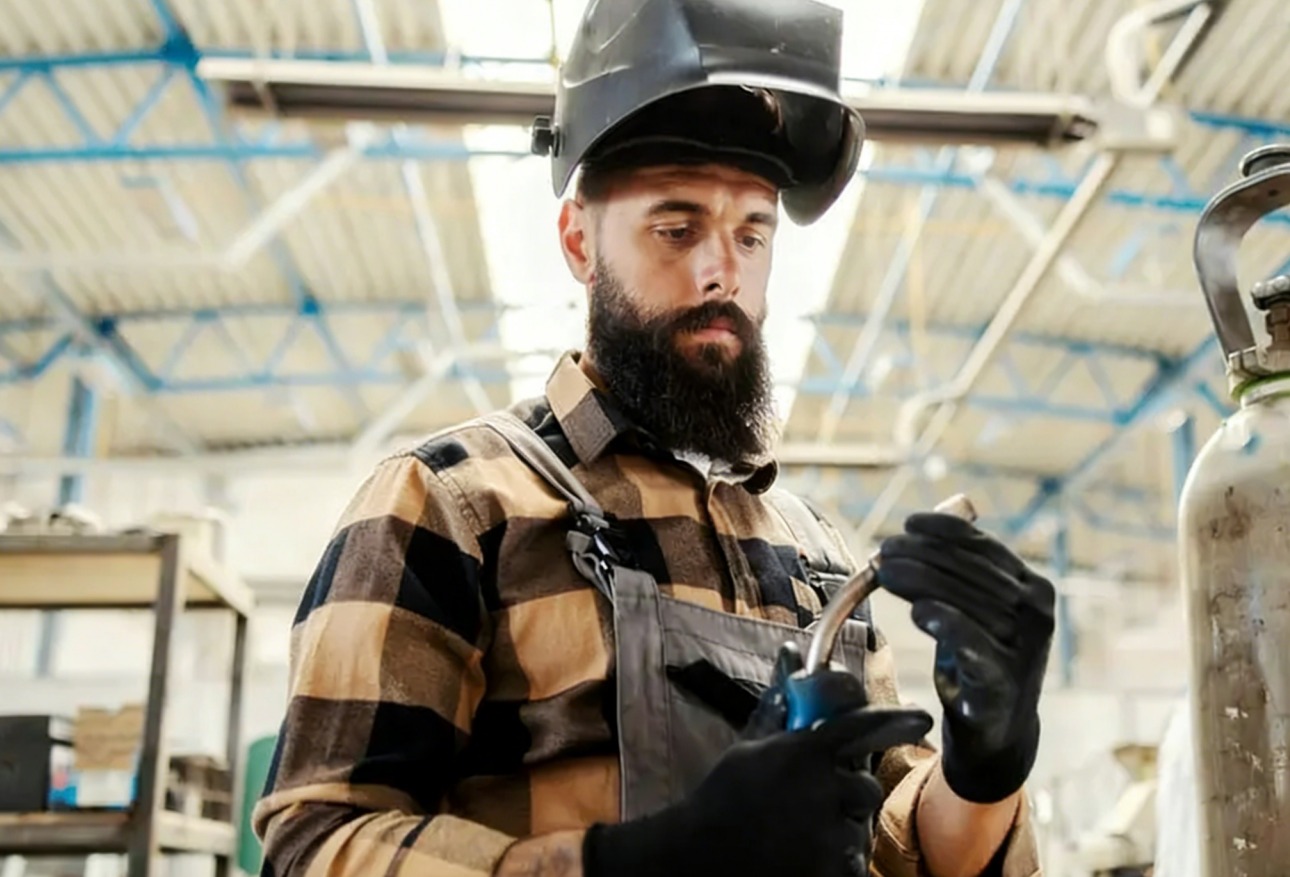
Dans les ateliers de fabrication de métaux, la machine à souder fait beaucoup plus que fondre le métal; Il maintient la production quotidienne sur la bonne voie. À DécapouerNous comprenons que lorsque l'unité échoue de manière inattendue, le problème va bien au-delà des frais de réparation. Les travaux s'arrêtent, les horaires glissent et des problèmes de sécurité émergent. Que vous soudiez tous les jours dans une grande boutique ou que vous assumiez des projets à domicile, l'entretien régulier permet à votre équipement de fonctionner sans heurts. Des routines régulières offrent des arcs cohérents, des perles soignées et de nombreuses années de performances fiables de votre machine.
Pratiques de maintenance de base: Assurer la stabilité du système
La longue durée de vie de la machine commence avec une attention constante et quotidienne. Sauter les étapes de base conduit souvent à l'accumulation de poussière ou de pièces usées, ce qui provoque la plupart des pannes précoces.
Liste de contrôle quotidienne d'inspection et de nettoyage
Commencez chaque shift avec une promenade rapide. Regardez chaque connexion de câble - la pince à terre, le plomb de torche et le plomb de travail. Assurez-vous qu'ils restent serrés sans isolation fissurée ou usée. Les taches lâches créent une résistance, accumulent de la chaleur et endommagent finalement les goujons de sortie. Éliminez la zone de travail de l'encombrement afin que l'air puisse se déplacer librement à travers les orifices d'admission et d'échappement. Les vents bloqués forcent la machine à fonctionner plus chaud qu'il ne devrait.
Entretien du système interne de pulvérisation et de refroidissement
Les ateliers de soudage restent poussiéreux. Les particules métalliques fines et la saleté générale se déposent sur les cartes de circuits, les modules IGBT et l'électronique de contrôle au fil du temps. Cette couche piège la chaleur et bloque l'air de refroidissement, augmentant la possibilité de courts circuits ou d'arrêts thermiques. Utilisez de l'air comprimé sec à basse pression - environ 30-40 psi - pour souffler la poussière à l'intérieur toutes les quelques semaines ou tous les mois, en fonction de la quantité de fumée et de grain que votre magasin produit. Gardez les ventilateurs de refroidissement tournant librement et les dissipateurs de chaleur libres d'accumulation afin que les circuits MCU numériques restent dans une plage de température sûre.
Gestion des consommables et accessoires de soudage
La machine ne fonctionne que aussi bien que les pièces qui touchent la soudure. Les consommables usés ou sales nuisent à la qualité des perles et forcent l'alimentateur de fil ou la source d'alimentation à travailler plus dur que nécessaire.
Surveillance de l'état des accessoires MIG/MAG et TIG
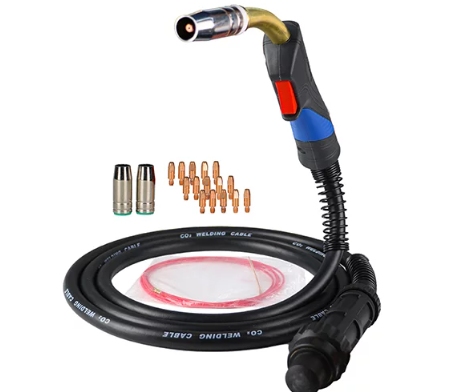
Dans les configurations GMAW (MIG/MAG) et GTAW (TIG), la pointe de contact, la buse et la doublure sont très importantes. Une pointe avec un alésage obstrué ou une doublure qui a perdu sa surface intérieure lisse ajoute de la traînée. L'alimentateur lutte ensuite, provoquant une vitesse de fil agitée ou des « nids d'oiseaux » enchevêtrés dans les rouleaux d'entraînement. Vérifiez souvent la buse pour détecter les éclaboussures qui s'accumulent à l'intérieur. L'accumulation lourde bloque le flux de gaz, ce qui conduit à la porosité dans la soudure finie. Choisissez le bon diamètre de buse, généralement entre 4 mm et 8 mm, en fonction de votre réglage actuel et de l'épaisseur du matériau. Une buse de bonne taille offre la meilleure couverture gazière sans gaspiller d'argon.
Stockage et séchage appropriés des électrodes
Les électrodes de soudage à bâton (SMAW) détestent l'humidité. Les tiges humides créent des arcs instables, des éclaboussures lourdes et des fissures cachées de l'hydrogène piégé dans la perle. Conservez les électrodes dans un placard sec ou un conteneur scellé loin des planchers humides et des portes ouvertes. Lorsque les tiges recueillent de l'humidité, séchez-les correctement avant utilisation. Les électrodes acides entrent dans le four à 150-200°C pendant environ une heure. Les types de base (alcalins) nécessitent une chaleur plus élevée (350 à 400 °C) pendant deux heures pour expulser l'eau sans endommager le revêtement.
Comprendre les limites opérationnelles: éviter la surcharge
Chaque soudeur a des limites strictes sur le courant, le temps et l'alimentation. Ignorer ces limites raccourcit rapidement la vie.
Adhérence stricte au cycle de travail
Le cycle de travail vous indique combien de temps la machine peut fonctionner à une ampérage donnée pendant une fenêtre de dix minutes avant qu'elle ait besoin de refroidir. Un taux de 60%, par exemple, signifie six minutes de soudage suivies de quatre minutes de repos. De nombreux onduleurs Decapower comprennent une protection thermique automatique qui coupe la sortie lorsque l'intérieur devient trop chaud. Pourtant, pousser la machine jusqu'au point d'arrêt à plusieurs reprises porte les composants plus rapidement et peut conduire à une défaillance antérieure.
Puissance d'entrée et sécurité du générateur
Les onduleurs modernes tolèrent une certaine oscillation de tension - généralement ±15% autour de la valeur nominale - mais l'alimentation instable provoque des problèmes. Un générateur sous-dimensionné ou mal régulé peut envoyer des pics ou des chutes de tension qui stressent l'électronique sensible. Associez toujours la sortie du générateur à la valeur d'entrée de la machine. Gardez la longueur du stickout entre 12 mm et 20 mm pendant le soudage MIG. Les distances plus longues ou plus courtes changent la résistance et peuvent faire sauter la lecture courante sur l'écran.
Projecteurs de produits Decapower: conçus pour la durabilité
Depuis 2011, Decapower se concentre sur les machines de soudage numériques qui combinent la qualité de construction solide avec des contrôles simples.
SYNMIG-200 : Précision numérique et polyvalence
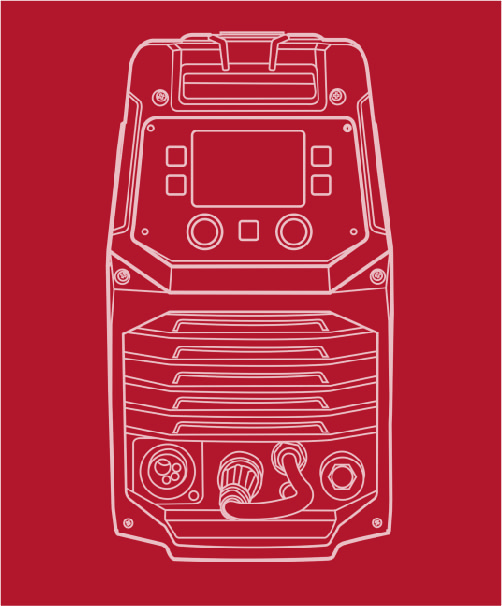
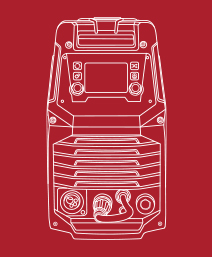
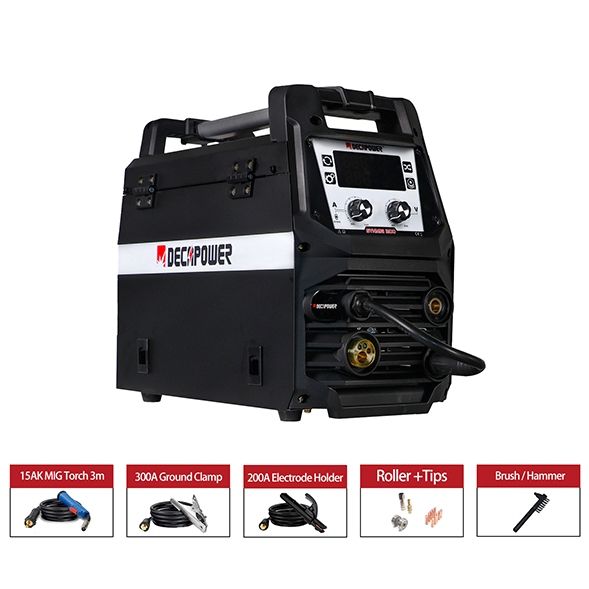
Le Synmig-200 fonctionne sur la puissance de l'inverseur avec commande de microprocesseur. Il gère GMAW, FCAW, SMAW et GTAW dans une seule unité compacte. Active Synergy vous permet de choisir le type de matériau et la taille du fil, puis de régler automatiquement la tension et la vitesse d'alimentation. Le grand écran numérique affiche des numéros clairs afin que vous puissiez composer rapidement les paramètres. Un puissant moteur d'alimentation de fil de 45 Watts pousse régulièrement le fil jusqu'à 15 m/min, ce qui aide à maintenir les arcs cohérents même lors de longues courses.
ECOARC 200 : puissance robuste pour chaque projet
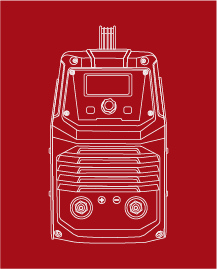
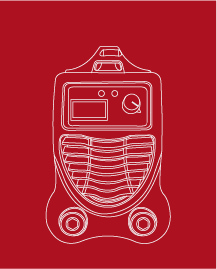
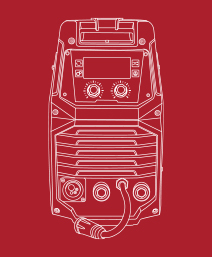
Si vous avez besoin d'une machine MMA fiable qui se déplace facilement, le ECOARC 200 utilise la technologie d'inverseur IGBT et le contrôle MCU. Il convient aux travaux de fabrication, aux travaux de réparation et aux tâches de carrosserie automobile. Le panneau numérique permet un contrôle précis du courant, tandis que le réglage intégré de la force d'arc aide à maintenir un arc stable sur les joints difficiles. De nombreux utilisateurs choisissent ce modèle pour son équilibre de portabilité et de performances fortes dans le soudage quotidien.
EASYMIG-140 : Efficacité conviviale
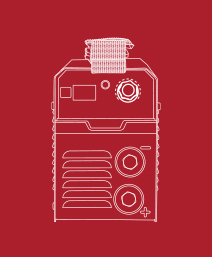
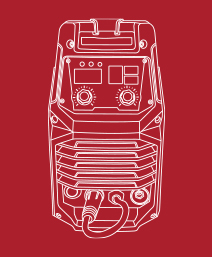
Le EASYMIG-140 propose un design 4 en 1 destiné aux débutants et aux petits magasins. La sélection à une clé active le contrôle des ondes de synergie, rendant la configuration presque aussi simple que le soudage à bâton. Malgré son fonctionnement facile, la machine utilise des puces numériques avancées pour une bonne pénétration et des perles propres. Les circuits de protection complète protègent contre la surchauffe, la surcharge et les pics de tension, de sorte que l'unité survient aux jours de travail sur le banc ou sur le terrain.
Support professionnel et services personnalisés
Decapower va au-delà des articles standard du catalogue. Chaque travail comporte des exigences différentes et notre équipe le comprend. Ingénieurs applicatifs et R& D group travaille directement avec les clients pour développer des solutions sur mesure. Besoin de courbes de paramètres spéciales pour une ligne à haut débit? Vous voulez une machine modifiée pour un processus ou un environnement particulier? Nous traitons ces demandes. Nous fournissons également des services OEM et ODM, permettant aux distributeurs et fabricants de transporter des équipements sous leur propre marque avec des fonctionnalités adaptées aux besoins du marché local.
FAQ (questions fréquentes)
Q: Comment choisir la bonne machine de soudage pour mon projet?
A: Choisissez en fonction du type de métal, de l'épaisseur du matériau, du processus de soudage et de votre expérience. Notre personnel peut parler à travers votre travail et recommander le meilleur ajustement.
Q: Puis-je utiliser mon soudeur Decapower avec un générateur?
R: Oui, mais le générateur doit fournir suffisamment d'énergie stable. Une unité sous-dimensionnée ou fluctuante augmente le risque d'endommagement de l'électronique.
Q: Puis-je obtenir des machines de soudage personnalisées pour mes besoins spécifiques?
R : Oui. Nos ingénieurs collaborent avec vous pour concevoir et produire des machines qui répondent à vos exigences de soudage exactes.
Q: Quel est l'avantage du “ Cycle de travail” mentionné dans le manuel ?
R: Il montre combien de minutes sur dix la machine peut souder à un courant donné sans surchauffage. Après l'évaluation, l'unité reste fraîche et prolonge sa durée de vie.